Tag: rincones-en

  • Why Is Teotihuacán Not One of the New Seven Wonders?

    Why Is Teotihuacán Not One of the New Seven Wonders?

    Last updated: March 24, 2026

    I mean that seriously.

    After visiting Teotihuacán, I genuinely do not understand why it is not talked about more often as one of the most breathtaking places in the world. Some places are famous because they are beautiful in photos. Others are famous because of history. But Teotihuacán has something else: scale, atmosphere, detail, and that rare feeling that what you are seeing is far bigger than you expected.

    I went thinking it would be a nice Sunday plan.

    I left thinking it should be considered one of the great modern wonders that somehow never got officially crowned.
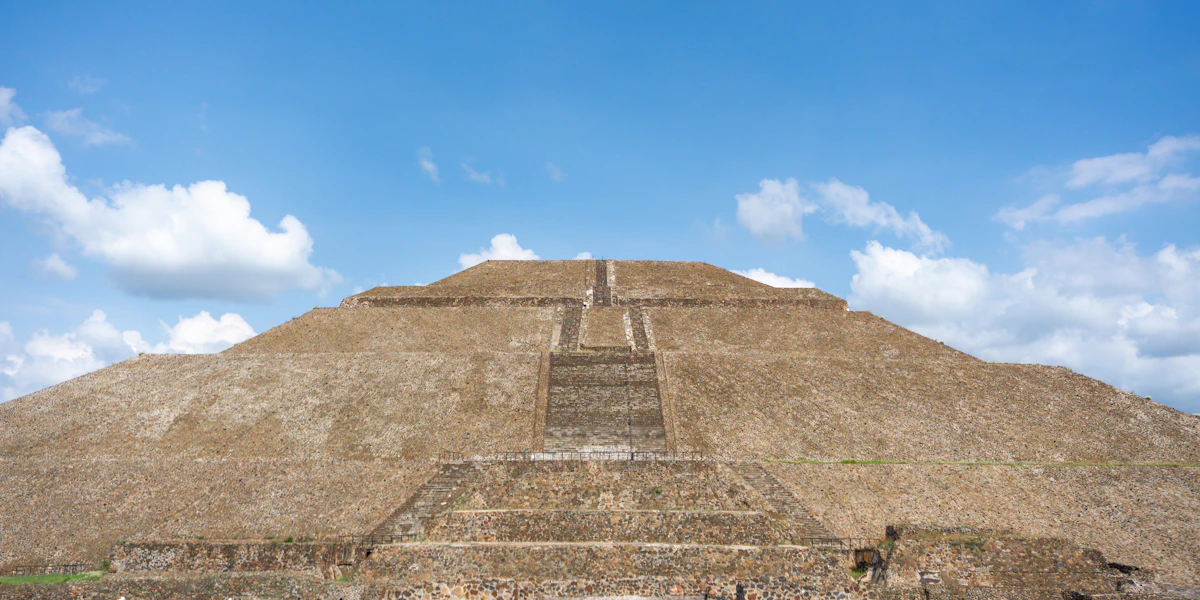
    Pyramid of the Sun at Teotihuacán — illustrative photo (Unsplash).

    Our trip started at 9 AM on a Sunday

    We left around 9 in the morning with a few other people and took an Uber from Parque México in Mexico City.

    We got lucky with the ride. It was a very comfortable Ford SUV, and the driver was incredibly kind. He even let us charge our phones on the way, which turned out to be very useful for a long day of photos and videos.

    The trip took about an hour and a half, and the fare was roughly 500 Mexican pesos. For a group trip, that felt completely worth it.

    The first surprise: it already felt busy

    Because it was Sunday, there was already traffic at the entrance by the time we arrived. Cars were lined up, and we had to walk around 200 meters to actually reach the entrance.

    My wife, who is Mexican, collected all of our IDs. I have permanent residency in Mexico, and she handled the tickets for us. To be honest, the whole entrance process felt surprisingly relaxed that day, almost as if things were moving more freely than expected.

    But what really hit us immediately was the weather.

    It was very sunny, and the heat was no joke.

    Right near the entrance, vendors were already selling water, and I would strongly recommend buying some. On a bright day like ours, the sun drains you fast, and this is definitely not the kind of place you want to explore dehydrated.

    A woman selling hats told me something I didn’t believe

    At one point near the entrance, a woman selling hats said something like:

    “You’ll spend three hours in there.”

    I remember thinking, No way. From here it looks small.

    That was my first mistake.

    Teotihuacán feels bigger with every step

    Once you enter the site, the layout is a little disorienting at first. It is not just one pyramid here and another one there. It is a massive open space, full of wide platforms, long paths, and geometric structures that keep stretching farther than you expect.

    You are also constantly moving up and down. You walk, climb a few steps, go down again, walk more, climb again. It is not difficult in a dramatic way, but it does make the site feel physical. You do not just look at Teotihuacán. You move through it.

    And slowly, the scale starts to sink in.

    My favorite pyramid was the first one

    The closest pyramid to the entrance was, for me, the most beautiful of them all: the Pyramid of the Feathered Serpent.

    This was the moment when Teotihuacán really grabbed me.

    What makes this structure so striking is the detail. You can still clearly see carvings of serpents and jaguar figures in the stone, and they are stunning. Even after all this time, the craftsmanship is still there in a way that feels almost unreal.

    The climb around this area is very short, less than a minute, because you are not really climbing the pyramid itself. You are stepping up onto a kind of raised platform that lets you face it properly.

    And that is exactly what makes it unforgettable.

    When you come down and the pyramid stands directly in front of you, it feels almost theatrical. It suddenly rises there with this elegant, powerful presence.

    For me, it was the most beautiful pyramid in the whole complex.

    Then the avenue opens up, and everything changes
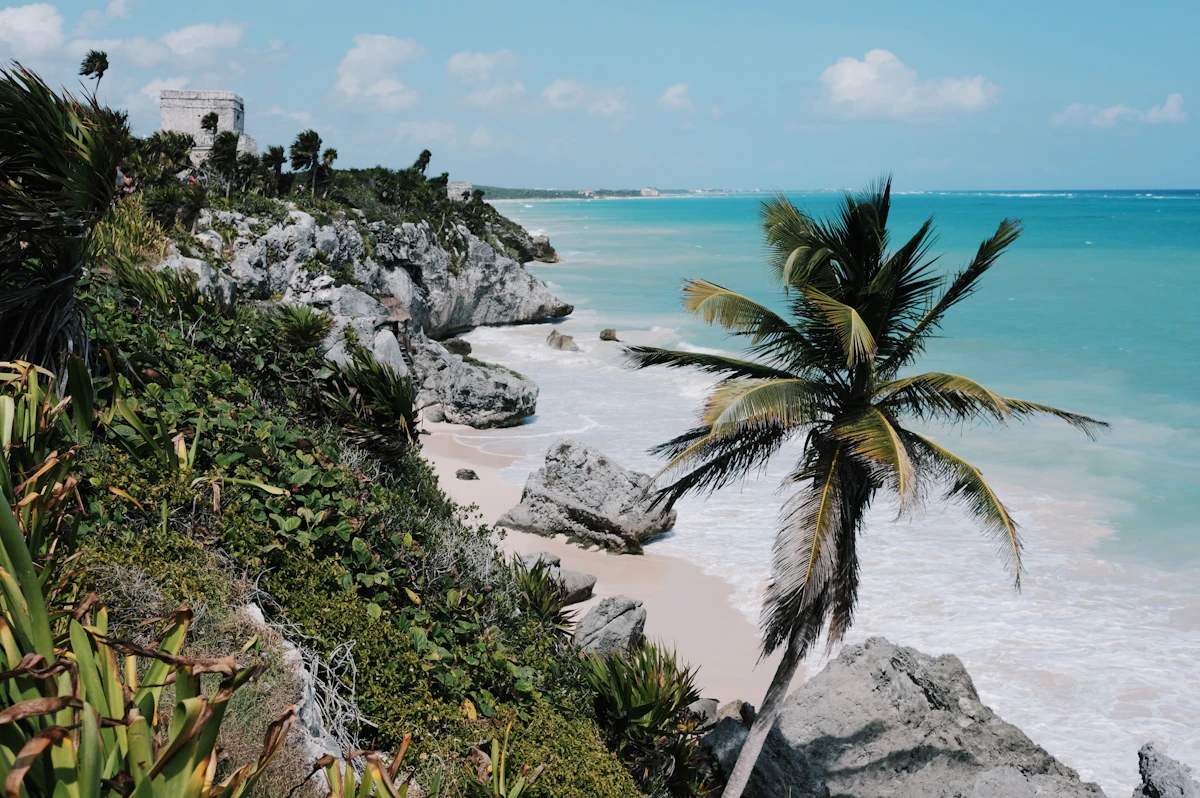
    Avenue of the Dead and Pyramid of the Moon — illustrative aerial (Unsplash).

    After that first section, you return to the main central area and suddenly the full dimension of Teotihuacán begins to reveal itself.

    A huge open avenue stretches ahead of you, so long that it almost plays tricks on your sense of distance. At the far end stands the Pyramid of the Moon, and from that moment on, the whole site starts to feel monumental in a completely different way.

    I would estimate that central stretch to be around 1.2 kilometers long, and walking it under the sun is part of the experience. It is not just about seeing ruins. It is about feeling how deliberately this ancient city was designed to impress.

    The Pyramid of the Sun is enormous even from below

    Before reaching the Pyramid of the Moon, you come across the Pyramid of the Sun.

    It is massive.

    Even without climbing it, it dominates the landscape in a way that makes you stop and stare. We took a lot of photos there, partly because the weather was perfect and the light made everything look incredible.

    There are guards watching the restricted pyramids, and it is worth knowing that both the Pyramid of the Sun and the Pyramid of the Feathered Serpent are off limits for climbing now. They are being protected, and honestly, that makes sense. Preserving them matters more than forcing access.

    At the moment, the only major pyramid you can still climb partially is the Pyramid of the Moon.

    The climb to the Pyramid of the Moon is short, steep, and worth it

    From far away, it already looks impressive.

    As you get closer, it becomes even more striking. Before reaching it, there is also a small raised mound that gives you one of the best photo spots in the entire site, especially for capturing the central avenue.

    And then comes the climb.

    It is not extremely long, but the steps are steep and wide, which makes it more challenging than it first looks. There must be around 100 steps, more or less, and if you go at a decent pace, it takes about 4 to 5 minutes.

    Going up is manageable.

    Going down is harder.

    A lot of people need to use the handrail, and you quickly see why. The steps force you to pay attention. On the way down, people almost take turns because everyone wants to descend carefully.

    The best photo spot is at the top left corner

    Once you reach the top section, there are people everywhere trying to take pictures.

    But for me, the best position is clear: if you are facing the valley, the left corner gives you the strongest angle.

    That is where the whole place comes together.

    From there, you can see the central avenue stretching out in front of you, the Pyramid of the Sun off to the left, and the mountains in the background completing the scene. It is one of those views that does not just look beautiful. It makes the whole site make sense.

    You stop seeing isolated monuments.

    You start seeing the remains of a civilization.

    On both sides, there are stone mounds that I believe were once homes or residential structures, and the wider view gives you a much stronger sense of what this place must have been like when it was alive.

    If you want your most memorable photo of the day, this is the moment.

    One of the most surprising parts comes at the end

    After coming down from the Pyramid of the Moon, we headed to the right and found a series of rooms and excavated spaces that were among the most surprising parts of the entire visit.

    Inside, you can see restored murals and traces of original paintings, including reddish tones that remind you of something easy to forget: these pyramids were not always bare stone. They were once much more colorful.

    That detail stayed with me.

    It changes how you imagine the entire city. Suddenly, it feels less like a silent archaeological site and more like the remains of something that was once vivid, decorated, and alive.

    Ice cream, souvenirs, and a perfect ending

    As you come down near the excavated areas, there are small stands near one of the exits where you can buy ice cream and souvenirs.

    By that point, after all the walking and the heat, that part felt very welcome.

    We then walked toward Exit 3, where there is a traditional Mexican restaurant that I highly recommend. It was absolutely delicious, and it felt like the perfect way to end the visit.

    After hours in the sun, surrounded by ancient stone and wide open views, sitting down for a proper Mexican meal was exactly what we needed.

    The ride back was longer

    For the return trip, we ordered a normal Uber rather than Comfort, and because it was Sunday afternoon, there was noticeably more traffic.

    The ride back took us almost two hours.

    But even with the extra traffic and the tired legs, I left with the same thought repeating in my head.

    How is this place not considered one of the great wonders of the modern world?

    Another angle on Teotihuacán (on X)

    Same city, same kind of Sunday energy — worth a scroll:

    Final thoughts

    I strongly recommend this trip to anyone spending time in Mexico City.

    Teotihuacán is not just a famous archaeological site. It is one of those rare places that feels larger than the story you were told about it. It keeps revealing itself as you walk, climb, pause, and look again.

    For me, it is easily one of the great wonders of the modern world that never got officially chosen.

    I expected a nice day trip.

    What I got was one of the most unforgettable travel experiences I have had in Mexico.


    Staying in Mexico City before or after this trip? We host furnished apartments in Roma Norte and Narvarte — see StayWork CDMX.


    Written by Daniel & Analí — Rincones Mexicanos.

  • Uber vs Didi in Mexico City: Which App Should You Use? (A Local’s Honest Take)

    Uber vs Didi in Mexico City: Which App Should You Use? (A Local’s Honest Take)

    We've lived in Roma Norte for over four years. Between us and our 280+ Airbnb guests, we've taken hundreds of rides on Uber and Didi across Mexico City — at rush hour, at 2 AM, to the airport, from the airport (when that was still easy), and everything in between.

    Here's what we actually tell our guests when they ask: download both apps before you land. But open Didi first.

    The short answer

    Didi is usually 10–20% cheaper than Uber for the same route. Uber has more drivers and slightly faster pickup times. Both are safe. Both work with international credit cards. You want both on your phone.

    That said, there are real differences that matter depending on where you're going, what time it is, and whether you're paying cash or card. Let's break it down.

    Price comparison: real rides from Roma Norte

    These are actual fare ranges we see regularly in March 2026. Prices fluctuate with demand, but this gives you a realistic picture.

    Route Uber (MXN) Didi (MXN) Savings
    Roma Norte → Condesa $40–70 $35–55 Didi ~15% less
    Roma Norte → Polanco $60–100 $50–85 Didi ~15% less
    Roma Norte → Coyoacán $120–180 $100–150 Didi ~15% less
    Roma Norte → Centro Histórico $50–80 $40–65 Didi ~15% less
    Roma Norte → AICM Airport $120–200 $100–170 Didi ~15% less
    Roma Norte → Xochimilco $200–300 $170–250 Didi ~15% less
    Roma Norte → Teotihuacán $500–600 $450–550 Didi ~10% less

    Why is Didi cheaper? Two reasons. Didi takes a smaller cut from drivers (about 20%) compared to Uber (about 25%). And Didi uses dynamic pricing less aggressively — when Uber spikes to 1.8x on a rainy Friday evening, Didi is often still at 1.2x or lower.

    Pro tip: When Uber shows surge pricing, check Didi. The difference during peak hours can be 30–40%, not just 15%. We've saved $50+ MXN on single rides this way.

    Availability and wait times

    Uber has more drivers in Mexico City. Period. Mexico is Uber's third-largest market globally, with about 25 million users and 300,000+ registered drivers nationwide. You'll almost always get an Uber within 3–5 minutes in Roma Norte, Condesa, or Polanco.

    Didi has fewer drivers overall, but it's growing fast. In central neighborhoods, wait times are comparable — usually 4–7 minutes. Where you'll notice the difference is late at night (after midnight) or in less touristy areas. If Didi can't find a driver, Uber almost always can.

    Our approach: Open Didi first for every ride. If the wait time is under 7 minutes and the price looks good, book it. If Didi shows 10+ minutes or no drivers available, switch to Uber.

    Safety: both are solid

    Let's be direct — both Uber and Didi are significantly safer than street taxis in CDMX.

    Both apps give you:

    • Driver name, photo, license plate before pickup
    • Real-time GPS tracking of your route
    • Digital payment (no cash transaction needed)
    • Trip history and receipts
    • Rating system that holds drivers accountable
    • Option to share your trip with a contact in real time

    Didi also uses a 4-digit security PIN that you give to the driver before they start the ride. Uber has rolled out a similar verification feature. Both are good additions, especially for airport pickups where multiple drivers may approach you.

    One important difference: Uber lets you request "Uber Mujer" in some cities (female driver for female passengers). As of March 2026, this is not yet available in Mexico City, but it's been rumored for launch before the World Cup.

    Avoid InDrive. It's cheaper, but the driver vetting is minimal, vehicles can be sketchy, and the negotiation model means less accountability. We don't recommend it to our guests.

    Payment: cash vs card

    Uber: Works with international Visa, Mastercard, and Amex. You can also pay in cash. Most drivers prefer cash because Uber takes weeks to process card payments to them.

    Didi: Also accepts international cards and cash. Didi was actually built with cash-first markets in mind, so the cash experience is smoother.

    Our recommendation: Add your card to both apps, but carry small bills ($50 and $100 MXN notes). Some drivers may cancel if they see card payment, especially for short rides. Having cash avoids that friction entirely. Also, many drivers can't break a $500 MXN note — keep smaller bills on hand.

    The airport situation (March 2026 update)

    This is where things get complicated. As of March 12, 2026, the Mexican government deployed Guardia Nacional (National Guard) at AICM airport to prevent Uber and Didi drivers from picking up passengers inside the terminals. This happened after taxi union protests.

    What this means for you:

    • You can still REQUEST an Uber or Didi from the airport — but the pickup won't be at the terminal
    • For Terminal 1: you'll need to walk about 500–900 meters to a nearby street where drivers can safely stop
    • For Terminal 2: the walk is 500–1,200 meters
    • The apps still work; the drivers are just waiting outside the enforcement perimeter

    The alternative: Buy a pre-paid authorized airport taxi ticket at the "Sitio" booth inside arrivals. Fixed rate to Roma Norte is $700–1,000 MXN. Yes, it's 4–5x what Uber/Didi would cost, but you walk straight from the terminal to a licensed car with zero hassle.

    Our full airport guide: Read our AICM airport transportation guide for the complete breakdown →

    Uber has filed a legal injunction (amparo) arguing their drivers have the right to operate at federal airports, and a federal judge has issued a temporary suspension protecting Uber drivers from sanctions. But enforcement is ongoing. Check our airport guide for the latest.

    NEW: Uber Shuttle (launched January 2026)

    Uber has launched "Uber Shuttle" in Mexico City ahead of the World Cup — a shared van/bus service with fixed routes, fixed schedules, and no surge pricing. Think of it as a middle ground between Uber and the Metrobús.

    Currently it's running routes to and from Santa Fe, but Uber plans to expand routes as the World Cup approaches, especially to Estadio Azteca and fan zones. Look for "Uber Shuttle" as an option in the regular Uber app. It uses a security PIN like Didi, and it's significantly cheaper than a regular Uber ride.

    This could be a game-changer during the World Cup when regular Uber/Didi prices will spike hard.

    Other apps worth knowing about

    Cabify: Still exists in CDMX but smaller market share. Slightly more expensive, slightly nicer cars. Fine as a backup.

    Taxi CDMX: The city government is reportedly building its own ride-hailing app for the World Cup. Not yet launched as of March 2026.

    InDrive: Budget option where you negotiate fares with drivers. We don't recommend it — lower safety standards, unreliable vehicles, bidding model is stressful. Fine for locals who know what they're doing, not ideal for visitors.

    Tips we give every guest

    1. Always verify before getting in. Check the license plate, driver name, and car model match what the app shows. This takes 5 seconds and is the single most important safety habit.

    2. Sit in the back seat. Always. It's safer and it's the cultural norm in Mexico — sitting up front with the driver is unusual.

    3. Rush hour will wreck your plans. Weekdays 7–10 AM and 4–8 PM, Mexico City traffic is brutal. A 15-minute ride becomes 45 minutes. Either leave early, take the Metro, or wait it out at a café.

    4. Rain = price spike. The moment it starts raining (common in afternoon/evening during rainy season, May–October), both Uber and Didi prices jump 30–50%. The Metro doesn't care about rain.

    5. The Metro is often faster. For cross-town trips during rush hour, the Metro ($5 MXN per ride) beats any rideshare in both speed and cost. We use Uber for convenience, but the Metro is the real workhorse.

    6. Don't take street taxis at night. Period. Use Uber or Didi. The safety gap between app-based rideshare and random street taxis is real, especially after dark.

    7. Tip in cash. If the ride was good, hand the driver $10–20 MXN in cash. Both apps have tipping options, but cash tips go directly to the driver without platform cuts.

    Our verdict

    Uber Didi
    Price Higher, more surge pricing 10–20% cheaper, less surge
    Availability More drivers, faster pickups Growing, good in central areas
    Best for Late night, less touristy areas Daily rides, budget-conscious
    Payment Card + cash Card + cash
    Safety Excellent Excellent
    Airport Currently restricted at AICM Currently restricted at AICM
    App quality Slightly better UX Functional, getting better
    Driver earnings ~75% of fare ~80% of fare

    Bottom line: Download both. Open Didi first for everyday rides. Switch to Uber when Didi can't find a driver or you're in a hurry. Use the Metro when traffic is insane. Never take a random street taxi at night.


    Need a base in Roma Norte? Our loft is about a 10-minute walk to the Metro (Insurgentes / Chilpancingo area) — easy to combine with Uber and Didi when you do not want to sit in traffic. Fast Wi‑Fi, a dedicated desk, self check-in, and a welcome guide with the same ride tips we give guests.

    → See our Roma Norte loft on StayWork CDMX · → See Narvarte & other listings


    Last updated: March 22, 2026. Prices and availability change constantly — we update this post as things evolve. The airport situation is particularly fluid ahead of the World Cup.

    Written by Daniel & Analí — hosts of StayWork CDMX with 280+ guest reviews. We take rideshares in CDMX daily and have strong opinions about surge pricing.

  • Mexico City Right Now Is a Beautiful Mess. Here’s What to Expect Before the World Cup.

    Mexico City Right Now Is a Beautiful Mess. Here’s What to Expect Before the World Cup.

    We live in Roma Norte. We walk these streets every day. And right now, in March 2026, Mexico City is in the middle of tearing itself apart to look good for the World Cup.

    If you're planning to come to CDMX in the next few months — whether for the tournament, for remote work, or just to travel — here's what you'll actually find when you land. No sugarcoating.

    The streets are a construction zone

    Walk around Roma Norte right now and you'll see it immediately: sidewalks ripped open, exposed pipes, orange barriers, dust everywhere. The city is rebuilding streets, repaving roads, and upgrading infrastructure across the central neighborhoods ahead of the FIFA World Cup kicking off in June.

    It's not just Roma Norte. Condesa, Juárez, the Centro Histórico, and the roads leading to Estadio Azteca — they're all getting work done at the same time. The result is a city that feels like it's under renovation from every angle.

    The dust is real. If you have allergies or sensitive lungs, bring a mask for walking around during the day. Some blocks are worse than others — the construction moves section by section, so one week your street is fine and the next week it's a pit.

    Our honest recommendation: if you can, come AFTER the World Cup month (July onwards). By then, the construction should be mostly done, the streets will be freshly paved, and you'll get to enjoy the upgraded version of the city without the chaos of building it. The city is going to look incredible once it's finished — it's just not finished yet.

    If you're coming during the construction period (now through June), don't let it stop you. The city is still fully functional, restaurants and cafés are open, the Metro works, and the neighborhoods are alive. You'll just need to dodge some orange cones and deal with dustier-than-usual streets.

    Safety: better than you think

    Here's something that might surprise first-time visitors: Mexico City feels safe.

    We've lived here for over four years and hosted 280+ guests from all over the world. The most common thing our guests say after their first day is: "I expected it to feel more dangerous than this."

    The central neighborhoods — Roma Norte, Condesa, Narvarte, Juárez, Polanco — are walkable, well-lit, and full of people at all hours. There's police presence, there are security cameras, and the streets are active from morning until late at night. It feels more like Barcelona or Buenos Aires than what most people imagine when they think "Mexico City."

    Our strong recommendation: stay in Roma Norte, Condesa, or Narvarte. These neighborhoods are safe, walkable, and have everything a remote worker or traveler needs within a few blocks — cafés, restaurants, grocery stores, coworking spaces, parks, and excellent Metro access. You don't need a car. You don't need to take taxis everywhere. You walk.

    That said, common sense applies everywhere:

    • Don't flash expensive electronics on empty streets late at night
    • Use Uber or Didi instead of hailing random taxis (especially at night)
    • Keep your phone in your front pocket in crowded Metro cars
    • Stay in the neighborhoods you know, especially if you're new

    But honestly? Most of our guests feel safer here than they expected. The vibe is relaxed, people are friendly, and the neighborhoods where digital nomads and travelers stay are genuinely comfortable.

    Watch out for protests and street closures

    This is something no travel guide mentions but you'll experience it if you're here for more than a few days: teacher union demonstrations regularly block major streets in CDMX.

    Right now (March 2026), the CNTE (teachers' union from several states) has been holding protests near the city center. When they demonstrate, they block transit on major avenues — and the ripple effect is brutal.

    We've had several days recently where Paseo de la Reforma — one of the city's main arteries — was completely gridlocked because protesters were blocking intersections. If you have a meeting, a flight, or anywhere you need to be on time, check the news that morning.

    Practical tips for dealing with protests:

    • Follow @ABORDONMX or @LOSMOCHILEROS_ on X/Twitter — they post real-time traffic and protest alerts for CDMX
    • Google Maps usually updates traffic quickly when major roads are blocked
    • If Reforma is blocked, everything between Centro and Chapultepec will be slow — plan alternative routes or just wait it out at a café
    • The Metro is your best friend when streets are blocked — it runs underground and isn't affected by surface protests
    • These protests are peaceful. You're not in danger — you're just stuck in traffic

    This is part of daily life in Mexico City. Locals are used to it. Once you learn to check for it in the morning, you adjust quickly.

    Flying in or out? Traffic to the airport can be hit hardest on protest days — we cover X accounts, embeds, and day-of tips in our AICM airport transportation guide.

    What this means for digital nomads and remote workers

    If you're coming to CDMX to work remotely, here's the bottom line:

    The good:

    • The city is safe in the central neighborhoods. We walk home at midnight regularly.
    • Wi-Fi in apartments and cafés is fast and reliable — this hasn't changed.
    • The cost of living is still excellent for anyone earning in USD or EUR.
    • The food, culture, and social scene are as good as everyone says.
    • The city will look amazing once the World Cup renovations are done.

    The temporary inconveniences:

    • Street construction makes some sidewalks dusty and noisy during the day.
    • The airport (AICM) is also under major renovation — read our AICM guide.
    • Occasional protest-related traffic jams on Reforma and nearby avenues.
    • Some streets may have detours or temporary closures in your neighborhood.

    None of these are dealbreakers. They're inconveniences that last a few months. The city underneath is still one of the best places in the world for remote workers — affordable, walkable, culturally rich, and incredibly welcoming to foreigners.

    Best neighborhoods to stay (and why)

    Roma Norte

    The heart of the digital nomad scene. Art deco architecture, the best café density in the city, walkable to everything. Our Roma Norte loft is here — 5-minute walk to the best coffee shops. Construction is happening on some streets but the neighborhood is fully operational.

    Condesa

    Adjacent to Roma Norte, slightly calmer and greener. Parque México is beautiful for morning runs. More residential, slightly more expensive. Great for people who want a quieter base.

    Narvarte

    Our second neighborhood. Calmer, more local, less touristy. Near the hospital district and Parque Delta. Excellent Metro access. Significantly cheaper than Roma Norte or Condesa. Great for longer stays where you want to save money without sacrificing comfort.


    Booking a base for the World Cup or remote work? Our Roma Norte loft is set up for serious Wi‑Fi and a proper desk; we also list calmer Narvarte apartments with great Metro access — same hosts who wrote this guide.

    → See our Roma Norte loft on StayWork CDMX · → Browse all StayWork listings


    Where NOT to stay

    Tepito, Doctores (parts of it), La Merced late at night, and areas far from Metro lines if you don't have a car. Stick to the neighborhoods above and you'll have a great experience.

    The World Cup timeline

    Here's what to expect over the next few months:

    Now through May 2026: Peak construction. Streets being rebuilt, airport under renovation, dust and noise. The city is hustling to get everything ready.

    June 2026: World Cup begins (June 11). Construction pauses. The city will be packed with fans, prices will spike, and the energy will be electric. Amazing to experience but not ideal for quiet remote work.

    July 2026 onwards: The sweet spot. Construction mostly done, World Cup crowds gone, freshly renovated streets and infrastructure. This is when the city will shine. If you can time your visit, this is it.


    Planning your CDMX stay? Our apartments in Roma Norte and Narvarte are set up for remote workers — fast Wi-Fi, dedicated workspace, self check-in, and monthly discounts. We'll help you navigate the construction, the airport, and everything else.

    → See all listings on StayWork CDMX


    Last updated: March 22, 2026. We update this post as the situation evolves. The World Cup starts June 11.

    Written by Daniel & Analí — hosts of StayWork CDMX with 280+ guest reviews. We live in Roma Norte and deal with the construction dust every day.

  • 7 Best Coffee Shops in Roma Norte for Remote Work (2026)

    7 Best Coffee Shops in Roma Norte for Remote Work (2026)

    We've hosted over 280 digital nomads and remote workers in Roma Norte. The first question every guest asks: "Where should I work from when I don't feel like staying at the apartment?"

    After four years of living here, these are the cafés we actually send our guests to — ranked by how well they work as a remote office, not just how good the latte art is. Prefer the quieter south side of the colonia? We also published best coffee shops in Roma Sur for remote work — especially the Calle del Bajío crawl. Still deciding on the colonia? Start from the Roma Norte hub or jump to Roma vs Polanco for work and Polanco vs Condesa vs Roma.

    Quick picks: Boicot for an all-day nomad hub · Cardinal for pour-over and focus · CUMBÉ for quiet and calls · Cibeles for terrace work · Buna for pastries + coffee · Libertario for drip and space · El Péndulo when you want a bookstore vibe · Privat.MX when you need a real desk.

    Photos below are stock images (illustrative mood only) — they are not always the exact venue.

    What we looked for

    Not every great café is a great place to work. We ranked these on what actually matters to remote workers: reliable Wi-Fi, available power outlets, comfortable seating for 2+ hours, reasonable noise levels, and a culture where laptops are welcome. Ratings and review counts are from Google Maps as of March 2026.


    1. Boicot Café — The unofficial nomad HQ

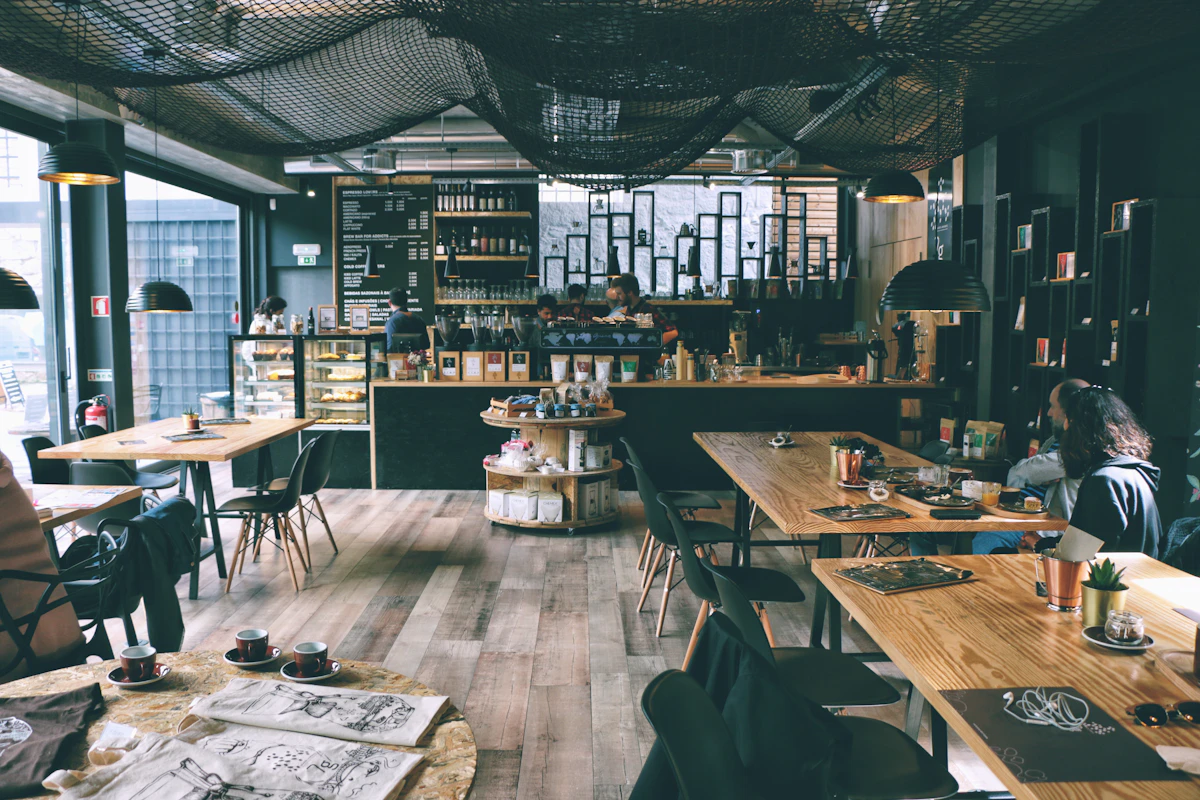
    Illustrative: busy café interior with espresso and natural light (stock photo).

    If Roma Norte had a default coworking café, this would be it. Boicot has indoor and outdoor seating, a massive menu that goes well beyond coffee, and a vibe that welcomes laptop workers without making you feel guilty about nursing a single cold brew for three hours.

    The cold brew flights are a nice touch — you can sample their full range while you work through your inbox. The food menu is large enough that you can have breakfast, lunch, and still be here for an afternoon coffee.

    What guests say on Google Maps:

    "A charming, trendy spot that perfectly blends a cozy atmosphere with serious coffee culture — an ideal place to get some work done. The free Wi-Fi and ample seating are a huge plus."

    "The design is well thought out — plants bordering the outdoor tables create space between traffic and diners. The music is a mix of energetic reggae, motown, and Latin acoustic."

    "They have English menus and indoor and outdoor seating. It's a really cool vibe."

    Address: Jalapa 99, Roma Norte
    Hours: Mon–Fri 7:00 AM – 10:00 PM · Sat–Sun 8:00 AM – 10:00 PM
    Rating: 4.4★ (3,900+ reviews)
    Wi-Fi: Yes, free · Outlets: Yes
    Best for: Full work days, team meetings, long sessions
    Walk from StayWork loft: ~8 min


    2. Cardinal Casa de Café — Best pour-over in the neighborhood

    Illustrative: hands pouring filter coffee (stock photo).

    Cardinal is where you go when you care about the coffee as much as the work. They specialize in manual brewing — V60, Chemex, AeroPress — with rotating Mexican micro-lots. The space is open-air with a calm atmosphere that's ideal for deep focus work.

    Reviewers consistently praise the baristas' craft. One visitor stopped in half an hour before closing and the barista still took the time to make a careful pour-over — that tells you everything about the culture here.

    What guests say on Google Maps:

    "My absolute FAVORITE coffee shop! If you're there, ask for Edgar — he is the BEST barista in Mexico. Hidden gem and MUST try."

    "Beautifully light and fruity pour-over. It was a treat to savor it in the open space with the evening breeze flowing through."

    "Cute, quiet little coffee shop in a nice neighborhood. For both the latte and pastry the cost was about $3.50 USD."

    Address: Córdoba 132, Roma Norte
    Hours: Mon–Sat 7:30 AM – 8:30 PM · Sun 9:00 AM – 8:30 PM
    Rating: 4.5★ (1,449 reviews)
    Wi-Fi: Yes, free · Outlets: Yes
    Best for: Deep focus work, solo sessions, afternoon writing
    Walk from StayWork loft: ~5 min


    3. CUMBÉ Coffee Roasters — The quiet one

    Illustrative: calm café seating and wood tones (stock photo).

    CUMBÉ is small, tucked away, and exactly what you want when you need to take a video call without background noise. Multiple reviewers specifically mention it as a great spot for remote workers who need to concentrate. It's pet-friendly, the pastries are excellent, and the wooden interior feels more like a private study than a busy café.

    If Boicot is the open-plan office, CUMBÉ is the private room.

    What guests say on Google Maps:

    "This is a great spot if you need to take a call or work on your computer. It's also pet friendly. Lots of pastries to choose from."

    "Cozy, cute, and relaxing coffee spot with friendly baristas and a nice atmosphere to hang out."

    "Really good coffee and insane pastries! I had the guava queso pastry and it was unreal."

    Address: Monterrey 82, Roma Sur (bordering Roma Norte)
    Hours: Daily 8:00 AM – 8:00 PM
    Rating: 4.7★ (1,242 reviews)
    Wi-Fi: Yes, free · Outlets: Yes
    Best for: Video calls, focused writing, quiet mornings
    Walk from StayWork loft: ~10 min


    4. Cibeles Gran Café — Best outdoor terrace for work

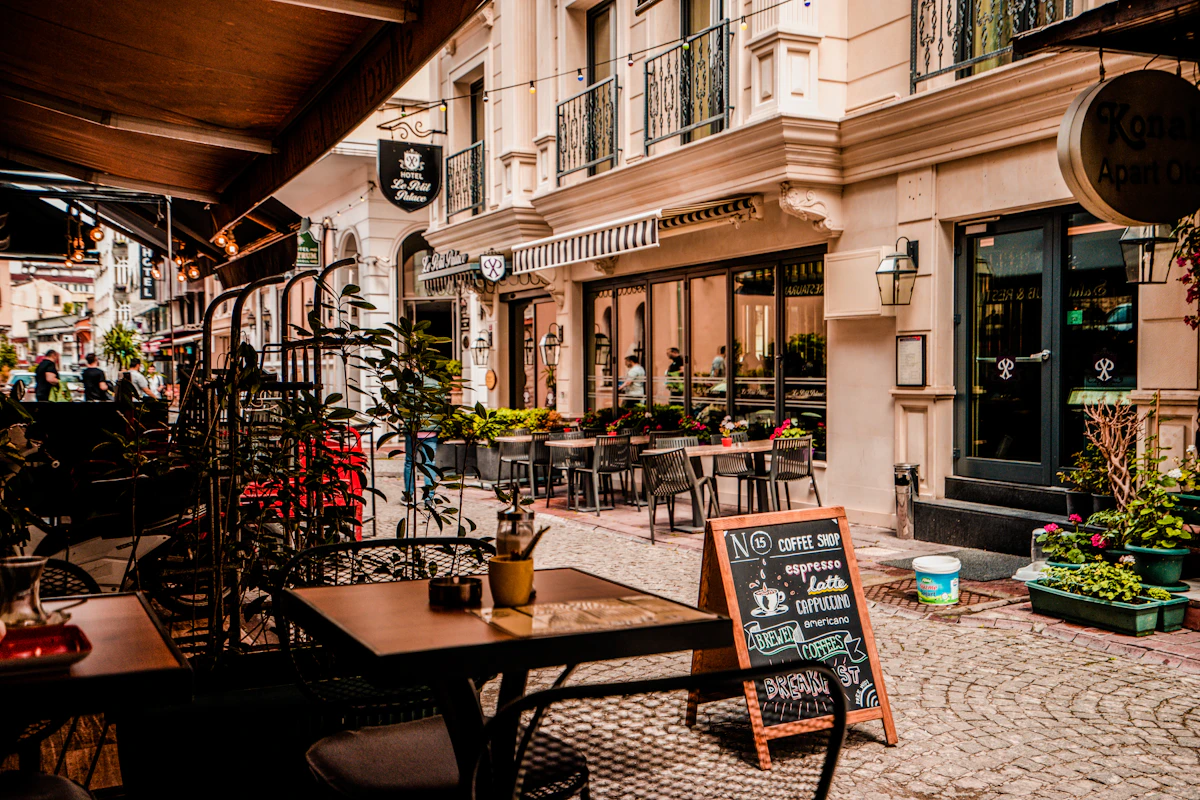
    Illustrative: outdoor café tables on a city sidewalk (stock photo).

    Cibeles has one of the best outdoor setups in Roma Norte — shaded, spacious, and perfect for those days when you want to feel the sun while you work. Reviewers consistently mention outlets and Wi-Fi, plus the staff is notably friendly and attentive.

    The chilaquiles are legendary. Come for a working brunch and you'll probably stay until mid-afternoon.

    What guests say on Google Maps:

    "One of the best outdoor spots in town — perfect for a laid-back, relaxing afternoon. The service is excellent, warm, and truly makes you feel at home."

    "Absolutely spectacular cajeta latte — possibly the best latte I've ever had. Outlets and WiFi, which is always awesome."

    "Reasonable prices, English menu available without gringo markup prices, attentive staff."

    Address: Durango 195, Roma Norte
    Hours: Mon–Fri 7:30 AM – 9:00 PM · Sat 8:30 AM – 10:00 PM · Sun 8:30 AM – 7:00 PM
    Rating: 4.6★ (1,267 reviews)
    Wi-Fi: Yes, free · Outlets: Yes
    Best for: Working brunches, outdoor sessions, Zoom-free afternoons
    Walk from StayWork loft: ~12 min


    Staying in Roma Norte? Our apartments are designed for remote workers — fast Wi-Fi, a dedicated desk with a 27" QHD monitor, and self check-in. For the days you don't feel like café-hopping, your workspace is already set up.

    → See our Roma Norte loft on StayWork CDMX


    5. Buna — Café Rico — Best pastries + coffee combo

    Illustrative: croissant and coffee on a table (stock photo).

    Buna is a Roma Norte institution. The almond croissant has been called the best in the city by multiple reviewers, and the coffee is strong enough to fuel a full morning of work. Seating is mostly outdoor under lush greenery, which makes for a beautiful workspace but means it can get loud on weekends.

    Come on a weekday morning for the best work setup. By Saturday, it's more of a brunch destination.

    What guests say on Google Maps:

    "My favorite coffee place in Roma Norte. The almond croissant is the best in the city — trust me, I tried a lot of them."

    "Cozy café with a lush outdoor setting and smooth, delicious coffee. An ideal spot to relax!"

    "Excellent iced latte and croissant! I've tried a few other places and this one is for sure my favorite in CDMX."

    Address: Orizaba 42, Roma Norte
    Hours: Daily 8:00 AM – 9:00 PM
    Rating: 4.5★ (1,635 reviews)
    Wi-Fi: Yes, free · Outlets: Limited
    Best for: Morning work sessions, coffee + pastry fuel, weekday visits
    Walk from StayWork loft: ~6 min


    6. Libertario Coffee Roasters — Best drip coffee

    Illustrative: spacious modern café with long tables (stock photo).

    Libertario is serious about coffee. They roast in-house, the baristas know their craft, and the drip coffee here is noticeably better than the espresso. The space is large and industrial-chic, with a mix of communal tables and smaller spots. It's connected to the Luca hotel, which gives it a slightly more polished feel than the average Roma Norte café.

    What guests say on Google Maps:

    "Their drip coffee is way better than latte! This is the perfect spot for a remote worker who needs outlets, stable wifi and quiet space."

    "Really good coffee, huge delicious sandwiches. A bit on the pricier side, but you get your money's worth."

    "Nice place to hang out for a bit. Big open space that's pet friendly."

    Address: Orizaba 16, Roma Norte
    Hours: Daily 8:00 AM – 8:00 PM
    Rating: 4.4★ (701 reviews)
    Wi-Fi: Yes, stable · Outlets: Yes
    Best for: Serious coffee drinkers, drip over espresso, afternoon sessions
    Walk from StayWork loft: ~5 min


    7. Cafebrería El Péndulo — The bookmark

    Illustrative: bookshelves in a café or bookstore (stock photo).

    This is not a typical remote work café — it's a bookstore with a café inside, and it's iconic. With 11,000+ reviews it's one of the most visited spots in Roma Norte. The barreled ceilings are beautiful, the food is solid, and it stays open until 11 PM (midnight on weekends).

    Come here for a change of scenery when you need inspiration, not when you need to grind through spreadsheets. The vibe is more "reading and sipping" than "laptop and headphones."

    What guests say on Google Maps:

    "Classic bookstore cafe experience. The architecture is beautiful with barreled ceilings. We have been twice and enjoy it each time."

    "Tasty food and I love the atmosphere — whether it's for lunch, dinner, or simply reading or studying. I've been coming here for years."

    "A very charming spot with beautiful books, artwork, and a cozy atmosphere. The whole place gives you a warm, pleasant feeling."

    Address: Álvaro Obregón 86, Roma Norte
    Hours: Mon–Thu 8:00 AM – 11:00 PM · Fri–Sat 8:00 AM – 12:00 AM · Sun 9:00 AM – 10:00 PM
    Rating: 4.5★ (11,216 reviews)
    Wi-Fi: Yes · Outlets: Limited
    Best for: Creative work, reading, evening sessions, change of scenery
    Walk from StayWork loft: ~7 min


    Bonus: When you need a real desk — Privat.MX CoWorking

    Illustrative: bright coworking space with desks (stock photo).

    If you need a full work day with reliable internet, private rooms, and zero distractions, Privat.MX is the best value coworking in Roma Norte.

    What members say on Google Maps:

    "Great coworking space. Wifi worked well. Free coffee. Great atmosphere with a back patio. Will definitely be back if I ever digital nomad in Mexico City again."

    "Spent 3 weeks working out of here and loved it. Weekly rate was $650 pesos, about 30 bucks. Great value. Endless coffee and lunch options nearby."

    "An awesome place to go heads down in Mexico City! Quiet space in a gorgeous neighborhood. Julietta is a gem and made us feel welcomed!"

    Address: Córdoba 95, Roma Norte
    Hours: Mon–Fri 8:00 AM – 10:00 PM · Sat 8:00 AM – 3:00 PM
    Rating: 4.8★ (68 reviews)
    Price: $650 MXN/week ($30 USD)
    Website: privat.mx


    Tips for working from cafés in Roma Norte

    Tipping: A 10–15% tip is standard in CDMX cafés. If you're camping for 3+ hours, consider ordering a second drink — it's good karma and keeps the staff happy.

    Wi-Fi speed: Virtually every café in Roma Norte has free Wi-Fi. Speeds are generally good enough for video calls, but if you have a mission-critical presentation, work from your apartment or a coworking space.

    Power outlets: Always check before you settle in. The cafés listed above all have outlets, but prime seats near plugs go fast — arrive before 9 AM on weekdays.

    VPN: Use one. Public Wi-Fi in any country is public Wi-Fi. We recommend our guests set one up before arriving.

    Don't be a laptop squatter: Order food, not just coffee. Rotate spots if you're working 8-hour days. The cafés that welcome nomads do so because nomads spend money — keep it that way.


    Where to stay in Roma Norte

    If you're planning a longer stay in Roma Norte for remote work, our loft is set up specifically for digital nomads — a dedicated desk with a 27" QHD monitor, fast Wi-Fi, rooftop pool, and self check-in. It's a 5–12 minute walk from every café on this list.

    We offer monthly discounts for stays of 30+ days. Book direct for the best rates.

    → View our Roma Norte loft on StayWork CDMX


    Written by Daniel & Analí — hosts of StayWork CDMX with 280+ guest reviews across Roma Norte and Narvarte. We've lived in Roma Norte for 4+ years and have strong opinions about coffee.

  • I Landed in Mexico City and Couldn’t Get an Uber. Here’s What Nobody Tells You About AICM in 2026.

    I Landed in Mexico City and Couldn’t Get an Uber. Here’s What Nobody Tells You About AICM in 2026.

    Last updated: March 23, 2026

    If you're flying into Mexico City right now, you need to be prepared. The AICM (Aeropuerto Internacional de la Ciudad de México) is simultaneously undergoing its biggest renovation in decades AND dealing with a fresh ban on Uber and Didi inside the terminals. The combination means longer waits, confusing detours, and significantly more walking than you'd expect.

    We've hosted over 280 guests in Roma Norte and Narvarte. Airport arrival is the #1 thing people message us about before their trip. Here's the honest, up-to-date guide.

    The current situation (March 2026)

    Two things happened at the same time:

    1. Massive World Cup construction

    Mexico is co-hosting the 2026 FIFA World Cup this summer. The AICM is racing to finish a $9.2 billion MXN renovation before the tournament starts in June — and they're nowhere near done.

    As of March 2026, the renovation is roughly 40% complete. The airport director has publicly admitted that not all work will be finished before the World Cup. Over 2,000 workers are operating 24 hours a day across both terminals.

    What this means for you as a passenger:

    • Blocked walkways and rerouted corridors in both Terminal 1 and Terminal 2
    • Construction barriers, dust, and noise in several areas
    • Some boarding gates relocated or temporarily closed
    • Baggage claim carousels being replaced (28 of them)
    • Elevators and escalators out of service in several sections
    • Façade work on Terminal 1 has eliminated the sidewalk between doors 2–6 — you may have to walk on the road with your luggage
    • Signage is unreliable because things change week to week

    Our advice: arrive at the airport at least 3 hours before your flight. The construction makes everything take longer — security checkpoints, walking to gates, and finding your way through detoured corridors. Don't cut it close.

    2. Uber and Didi banned from picking up inside

    On March 11, 2026, licensed taxi drivers blocked both terminals in a protest against ride-hailing apps. The government sided with the taxi drivers. Since March 12, the Guardia Nacional (National Guard) is permanently stationed at the AICM to prevent Uber and Didi from operating inside the airport's federal zone.

    What national TV reported (Azteca Noticias, Hechos Meridiano, via this post on X): authorities are carrying out a strict enforcement push at the airport against app-based taxis, with fines of up to about MXN $80,000 in some cases — even as legal challenges (a judicial suspension has been in the news) continue in parallel. Reporter Jessie Mozar (@jessiemozar) noted that the policy in force since March 12 is already hitting drivers’ income and how many rides you actually see available near the terminals.

    This means for you as a traveler:

    • Uber and Didi drivers cannot pick you up inside the terminal or the airport’s federal zone — you still have to walk out to request a ride (see below)
    • Drivers who break the rules risk heavy fines and enforcement, not just a slap on the wrist — which is part of why fewer drivers may accept airport pickups than before
    • The official airport taxis now have a near-monopoly on curbside arrivals
    • Prices for official taxis have surged to $700–1,000 MXN ($35–50 USD) for a ride to Roma Norte — a trip that costs $80–150 MXN on Uber once you are outside the zone

    The ban is not temporary. It was negotiated as a condition to prevent permanent taxi blockades during the World Cup. The legal story can change — watch trusted Spanish-language outlets (@AICM_mx, @aztecanoticias) if you want the latest before you fly.

    How to get from AICM to Roma Norte (or Condesa / Narvarte)

    Here are your four realistic options, ranked from cheapest to easiest:

    Option 1: Uber or Didi — still works, but you have to walk out

    This is what most of our guests do. Uber and Didi are NOT gone — you just can't get picked up inside the terminal anymore. You need to walk outside the airport's federal zone to a designated pickup area.

    From Terminal 1:

    1. Exit the terminal through any door
    2. Walk toward Circuito Interior (Boulevard Puerto Aéreo)
    3. Head toward Metro Terminal Aérea station (Línea 5)
    4. The pickup zone is approximately 800–900 meters from the nearest terminal door
    5. Open Uber or Didi and request your ride from there
    6. Enter your terminal number and door in the app notes

    From Terminal 2:

    1. Exit through Puerta 1 (Door 1)
    2. Walk to Eje 1 Norte / Avenida Fuerza Aérea Mexicana
    3. The pickup bay is approximately 500 meters from the door — though some sources say up to 1,200 meters depending on which door you exit
    4. Request your ride from there

    Cost to Roma Norte: $80–150 MXN ($4–8 USD)
    Total time: 25–40 minutes (including the walk)

    The reality check: You'll be walking 500–900 meters with your luggage, potentially at night, past construction zones. The walk is on public roads and generally safe, but it's not the smooth arrival experience you might expect. If you're arriving at 2 AM with heavy bags after a 10-hour flight, think about whether the $600+ savings is worth it.

    Pro tips:

    • Install Uber AND Didi before you fly — have both as backup
    • Download CDMX offline maps in Google Maps (airport Wi-Fi is unreliable)
    • Get a Mexican eSIM before you land (Airalo or Holafly) so you have data immediately
    • Request UberX or Didi Express for the best price
    • Surge pricing hits hard between 6–9 PM and Sunday evenings

    The morning of your flight: check traffic into AICM

    Protests or major road closures in the city can add 30–60+ minutes to the drive between Roma, Condesa, Narvarte, and the airport — the same arteries ride-hailing uses get gridlocked when Reforma or nearby corridors are blocked.

    Below is an embedded post from Azteca Noticias. If it does not load (ad blockers, X outages), open it on X.

    For city-wide construction and protests (not only the airport), see our guide to CDMX before the 2026 World Cup.

    Option 2: Official airport taxi — expensive but zero hassle

    Licensed taxi booths are inside both terminals. You buy a ticket at the counter, tell them your destination, and walk to the taxi stand.

    Cost to Roma Norte: $700–1,000 MXN ($35–50 USD)
    Total time: 15–25 minutes

    Yes, you're paying 5–10x more than Uber for the exact same 10 km trip. That price difference is exactly why the taxi drivers fought so hard to ban apps from the terminals — and why the government backed them.

    When this makes sense: Late-night arrivals, heavy luggage, first-time visitors who don't want to navigate construction zones in the dark, or anyone who values a stress-free arrival over saving money. No judgment — after a long flight, sometimes you just want to be in bed as fast as possible.

    Option 3: Pre-arranged private transfer

    Several companies offer meet-and-greet service inside the terminal with a name sign. You book in advance, they handle everything.

    Cost: $400–600 MXN ($20–30 USD)
    Total time: 15–25 minutes, zero walking

    This is the sweet spot between Uber prices and official taxi convenience. We can arrange this for our StayWork CDMX guests — just send us your flight number when you book.

    Option 4: Metro — cheapest, with caveats

    Metro Terminal Aérea (Línea 5) connects to the airport. From there you can reach Roma Norte via transfers.

    Cost: $5 MXN ($0.25 USD)
    Total time: 40–60 minutes with transfers

    Honest take: We don't recommend this if you're arriving with luggage larger than a backpack, at night, or on your first visit. The Metro is safe during daytime rush hours but the transfers with suitcases through crowded stations are not fun. It's a great system once you're settled — just not ideal for airport arrival.


    Figured out how you'll leave the airport? Our Roma Norte loft is about 20 minutes from AICM by Uber or taxi once you're outside the terminal zone. Fast Wi‑Fi, a dedicated desk with a 27" QHD monitor, rooftop pool, and self check-in — handy when you land at 2 AM after the construction walk.

    → See our Roma Norte loft on StayWork CDMX


    Quick comparison

    Option Cost (to Roma Norte) Time Walk with luggage?
    Uber / Didi $80–150 MXN 25–40 min 500–900m walk to pickup
    Private transfer $400–600 MXN 15–25 min None — they meet you inside
    Official taxi $700–1,000 MXN 15–25 min None
    Metro $5 MXN 40–60 min Stairs and transfers

    What to expect inside the airport right now

    Based on current reports (March 2026) and feedback from our recent guests:

    Terminal 1:

    • Façade work between doors 2–6 has eliminated the sidewalk — you walk on the road
    • Boarding gates in module 5 (gates 24–28) under renovation
    • Baggage claim belts 1–3 being replaced
    • New security screening equipment being installed (should be faster once done)
    • Construction dust and noise in several corridors
    • The Aerotrén (inter-terminal train) station is under renovation

    Terminal 2:

    • Boarding lounges in the north and south wings under renovation
    • Parking structure being upgraded (new signage, colored floors by level)
    • New digital signage screens installed in some areas
    • International baggage claim area under construction
    • Bathroom renovations across multiple levels

    Both terminals:

    • Rerouted walking paths with temporary barriers
    • Some commercial areas closed or relocated
    • Floors, ceilings, walls being replaced in phases
    • Electrical, plumbing, and drainage systems being overhauled
    • 2,000+ workers active 24/7

    The construction is scheduled to pause between late May and July 2026 during the World Cup, then resume until the end of the year. If you're visiting during the tournament, the airport should be calmer but still not fully finished.

    Before you fly: preparation checklist

    • Download Uber AND Didi apps, add payment method
    • Download Google Maps offline map for Mexico City
    • Get an eSIM (Airalo, Holafly) or plan to buy a Telcel SIM at the airport ($150–200 MXN)
    • Have $1,000 MXN cash as backup (some taxis and shuttles are cash-only)
    • Know your terminal number (check your airline)
    • Tell your host your flight number and arrival time
    • Leave extra time — arrive 3 hours before departure flights
    • Pack light or use a backpack if you plan to walk to the Uber pickup
    • Morning of your flight: glance at traffic on X (see section above) so you are not surprised by closures on the way to AICM

    Once you're in Roma Norte, you won't need taxis again

    This is the silver lining. The airport transfer is the one painful moment of arriving in Mexico City. Once you're in Roma Norte, everything is walkable — cafés, coworking spaces, restaurants, groceries, Metro stations. Our guests rarely take a taxi or Uber during their stay because the neighborhood is that well-connected on foot.

    The airport chaos is temporary. Your stay in Roma Norte won't be.


    Last updated: March 23, 2026. The airport situation is evolving rapidly. We update this post as new information becomes available. The World Cup starts June 11 — expect further changes.

    Written by Daniel & Analí — hosts of StayWork CDMX with 280+ guest reviews. We've navigated AICM arrivals more times than we can count.