Category: CDMX Nomad

English guides for Mexico City digital nomads — synced to rinconesmexicanos.mx /en/cdmx-nomad/

  • Mexico Digital Nomad Visa: The Honest 2026 Guide With Prices

    Mexico Digital Nomad Visa: The Honest 2026 Guide With Prices

    If you search for the Mexico digital nomad visa, most articles make it sound like Mexico has a neat, official visa category designed for remote workers.

    It does not.

    As of April 12, 2026, Mexico does not publish an official visa category called a “digital nomad visa.” What most remote workers actually use is the Temporary Resident Visa, then the in-country residence card process with the INM after arrival.

    That distinction matters because the real process is more bureaucratic, more consulate-specific, and more expensive in 2026 than many older blog posts suggest.

    If you want the honest version, this is it.

    The short answer

    • There is no official Mexico digital nomad visa in 2026.
    • The route most remote workers use is the Temporary Resident Visa.
    • It is designed for stays of more than 180 days and up to 4 years.
    • After approval at a Mexican consulate abroad, you normally enter Mexico and exchange the visa for a resident card within 30 calendar days.
    • The biggest hurdle for most applicants is financial solvency.
    • The biggest mistake is treating consular requirements as one universal global number when they clearly are not.

    Is there a Mexico digital nomad visa in 2026?

    No, not as an official standalone category.

    That is an SEO phrase, not the name of a visa category published by Mexican immigration authorities or consulates.

    The cleanest official way to describe the route most remote workers use is this:

    • apply for a Temporary Resident Visa at a Mexican consulate outside Mexico
    • enter Mexico with that visa
    • complete the exchange for a temporary resident card with the immigration authority

    Official consular guidance describes this route as the option for foreigners who want to stay in Mexico for more than 180 days and no longer than 4 years.

    Who normally uses this route?

    In practice, the Temporary Resident Visa is the path used by:

    • remote employees paid by a foreign employer
    • freelancers with foreign clients
    • online business owners earning abroad
    • retirees or long-stay applicants qualifying through income or savings

    Several official Mexican consular pages also make the remote-work angle unusually explicit: they state that this type of visa allows the foreigner to work in Mexico as long as the salary is paid abroad.

    That is the closest thing to official language supporting the typical digital-nomad setup.

    How the Mexico temporary resident process usually works

    For most remote workers, the process is two-stage:

    1. Apply at a Mexican consulate outside Mexico.
    2. Once approved, enter Mexico and complete the resident-card process with INM.

    Official consular guidance also makes two timeline points clear:

    • the visa route is for stays over 180 days
    • after entering Mexico, you usually have 30 calendar days to apply for the residence card

    That second step is the part many blog posts rush through. The consulate approval is not the whole process.

    Mexico digital nomad visa requirements in 2026

    The exact checklist varies by consulate, but the standard base usually includes:

    • valid passport
    • visa application form
    • photo
    • proof of legal stay in the country where you are applying, if relevant
    • financial proof

    For most digital nomads, the real make-or-break requirement is economic solvency.

    The real financial thresholds in 2026

    This is where the “honest guide” part matters.

    You will often see blanket statements online like:

    • “Mexico requires exactly X dollars per month”
    • “The digital nomad visa threshold is exactly Y in savings”

    That is too simplistic.

    Official Mexican consular pages in 2026 do not all present the numbers in the same way.

    The federal-style benchmark many people reference

    Some official consular pages still express the threshold in UMA:

    • 680 UMA in monthly income
    • 11,460 UMA in average savings or investments

    Using the 2026 UMA value of MXN 117.31, that works out to roughly:

    • MXN 79,770.80 monthly income
    • MXN 1,344,372.60 in average balance

    That is the benchmark many “Mexico digital nomad visa” articles are trying to summarize.

    What official consulates are actually publishing

    Here is why applicants get confused: official consulates do not all publish the same converted figures.

    Examples from current official pages:

    • San Diego currently publishes about USD 4,049 monthly income or USD 68,241 in savings
    • Montreal currently publishes about CAD 6,160 monthly income or CAD 102,671 in savings
    • Belgium currently publishes the requirement directly as 680 UMA monthly income or 11,460 UMA in savings

    So if someone says the Mexico digital nomad visa requires one exact number worldwide, that is not how the official consular pages look in real life.

    The honest rule: your consulate matters

    This is the part many articles skip.

    Even when the legal framework is federal, the consulate handling your application still matters in practice because it can vary on:

    • how it displays the solvency threshold
    • what supporting documents it wants to see
    • how strict it is about bank stamps, employer letters, translations, and originals
    • how quickly it schedules and reviews appointments

    So the right mental model is not:

    “Mexico’s digital nomad visa costs exactly X and requires exactly Y everywhere.”

    It is:

    “Mexico uses a real temporary-residence route, but my exact paperwork and threshold presentation depend partly on the consulate where I apply.”

    Mexico digital nomad visa cost in 2026

    There are two main government-cost buckets to budget for.

    1. Consulate visa fee

    Many official 2026 Mexican consular fee tables in North America now list the ordinary visa application fee at USD 56.

    That said, you will still find some official visa pages showing USD 54 or older local equivalents. In other words: the fee tables and the individual visa instruction pages are not perfectly synchronized everywhere.

    If you want the safe budgeting number for 2026, assume about USD 56 at the consulate, then confirm the exact amount with your specific consulate before the appointment.

    2. Resident card fee in Mexico

    After entering Mexico and finishing the resident-card step, the 2026 fees for temporary residence are much higher than many older blogs still show.

    Budget approximately:

    • 1 year: MXN 11,141
    • 2 years: MXN 16,693
    • 3 years: MXN 21,143
    • 4 years: MXN 25,058

    Those are the numbers that matter if you are trying to estimate the real 2026 cost of long-stay residence in Mexico.

    3. Other costs people forget

    Beyond the government fees, you may also spend on:

    • travel to the consulate
    • photocopies and document printing
    • translations or apostilles if requested
    • courier or mailing costs in some cases
    • facilitator or lawyer fees if you hire help

    Those extra costs are not fixed government charges, but they are real.

    How long does it take?

    There is no one honest timeline that fits everyone.

    The official process is clear, but the real timing depends on:

    • how hard it is to get a consular appointment
    • whether the consulate asks for additional documents
    • whether the case can be processed quickly or needs further review
    • how busy the INM office is where you finish the card process in Mexico

    Some official consular pages say the visa may be issued quickly in clean cases, while others warn that review can take up to 10 business days or more.

    That is why anyone promising a universal timeline is overselling certainty.

    Can you legally work in Mexico on this visa?

    For the standard remote-work scenario, generally yes.

    Official Mexican consular guidance explicitly says this type of visa allows the foreigner to work in Mexico provided the salary is paid abroad.

    That is why remote employees and foreign-client freelancers use it.

    What you should not do is confuse that with blanket permission for every income setup. If your work becomes more Mexico-based, if you bill local clients, or if you move toward local employment, the compliance picture changes.

    Tax in Mexico: the part digital nomads underestimate

    Immigration status and tax status are not the same thing.

    This is one of the biggest mistakes in the whole “digital nomad visa” conversation.

    Mexico’s Federal Fiscal Code, Article 9, says an individual can be treated as a tax resident in Mexico if:

    • they establish their home in Mexico, or
    • when they have a home in Mexico and another country, their center of vital interests is in Mexico

    The same article says center of vital interests can exist, among other cases, when:

    • more than 50% of total annual income is sourced in Mexico, or
    • the main center of professional activities is in Mexico

    That is the official tax-law lens, and it is more nuanced than the casual internet version.

    The honest tax takeaway

    Do not assume any of the following without professional advice:

    • “My salary is foreign, so Mexico tax does not matter.”
    • “A resident visa automatically makes me a tax resident.”
    • “A resident visa automatically means I am not a tax resident.”

    If you plan to spend serious time in Mexico, especially if you are building a real base here, a qualified Mexico tax adviser is worth it.

    Is Mexico still worth it for digital nomads in 2026?

    For many people, yes.

    Mexico still offers a strong mix of:

    • time-zone convenience for North America
    • excellent food and daily-life quality
    • major city infrastructure
    • beach and inland lifestyle options
    • a workable long-stay immigration route

    What Mexico does not offer is a beautifully packaged, one-click visa category built just for remote workers.

    The system is usable. It is just not branded or simplified the way some newer “digital nomad visa” countries market themselves.

    Pros and cons

    Pros

    • there is a real long-stay path through temporary residence
    • official consular guidance supports the standard “salary paid abroad” remote-work model
    • approved stays can cover more than 180 days and up to 4 years

    Cons

    • there is no dedicated digital nomad visa category
    • financial thresholds are high
    • official numbers vary between consulates
    • 2026 residence-card fees are significantly higher than many older articles still show

    If CDMX is your base, read these next

    If you are looking at Mexico but realistically mean Mexico City, these guides will save you time:

    Using CDMX as your Mexico base after you get residency sorted? Our apartments at StayWork CDMX are designed for remote workers: fast Wi-Fi, proper workspaces, self check-in, and neighborhoods we recommend in our guides.

    → See our Roma Norte loft · → Browse all StayWork listings

    FAQ

    Does Mexico have a digital nomad visa in 2026?

    No. There is no official visa category called “digital nomad visa.” The route most remote workers use is the Temporary Resident Visa.

    How long can you stay in Mexico on the usual remote-worker route?

    Official consular guidance describes the temporary resident route as valid for stays of more than 180 days and up to 4 years.

    How much does the Mexico digital nomad visa cost?

    The honest answer is that the process has multiple costs. Many 2026 consular fee tables list about USD 56 for the visa application, while the temporary resident card in Mexico costs roughly MXN 11,141 to MXN 25,058 depending on how many years are granted.

    Can you work remotely in Mexico on temporary residence?

    Official consular guidance says the visa allows the foreigner to work in Mexico as long as the salary is paid abroad, which is why remote workers use it.

    Is a temporary resident visa the same thing as tax residency?

    No. Immigration status and tax residency are different legal questions.

    Final verdict

    If you search for the Mexico digital nomad visa, the honest 2026 answer is this:

    • it is really the Temporary Resident Visa
    • the consular fee is usually about USD 56, but check your exact post
    • the resident-card fee in Mexico is now much higher than many old blogs show
    • the financial thresholds are real, and the way they are presented varies by consulate
    • the tax question is separate and should not be guessed at casually

    That is less flashy than the usual “easy Mexico nomad visa” headline.

    It is also closer to the truth.

    Last updated: April 12, 2026. Immigration fees, consular requirements, and tax interpretations can change; always verify with your exact Mexican consulate and a qualified immigration or tax professional before acting on them.

    Written by Daniel & Analí — local hosts behind StayWork CDMX, with 280+ guest reviews in Mexico City.

  • Best Neighborhoods to Stay for World Cup 2026 in Mexico City if You Want Cafés + Remote Work

    Best Neighborhoods to Stay for World Cup 2026 in Mexico City if You Want Cafés + Remote Work

    If you are coming to Mexico City for the 2026 FIFA World Cup and still need your trip to function like real life, the neighborhood matters more than people think.

    FIFA schedules the tournament's opening match in Mexico City on June 11, 2026, and the city is due to host five matches total. That sounds like an argument for sleeping as close to the stadium as possible. In practice, it usually is not.

    For most travelers mixing football with laptop time, calls, cafés, and normal day-to-day life, the best base is the one that gives you a walkable routine between matches, not the one that saves the absolute shortest ride on one or two stadium days.

    We live in Roma Norte and host remote workers in CDMX, so this is the version we would actually give a guest planning a World Cup stay.

    The short answer

    Best for Neighborhood
    Best overall for cafés + remote work Roma Norte
    Best for parks + lifestyle Condesa
    Best for central access Juárez
    Best for comfort + upscale stays Polanco
    Best for south-side charm / easier stadium access Coyoacán

    If you want the one-sentence answer: book Roma Norte or Condesa first, look at Juárez if you want a more central urban base, choose Polanco if comfort matters more than neighborhood character, and consider Coyoacán only if being closer to the stadium side of the city is part of the plan.

    Why location matters so much during World Cup 2026 in CDMX

    Mexico City is huge. The stadium most travelers still think of as Estadio Azteca sits in the south, while many of the neighborhoods people actually enjoy living and working from sit farther north and west.

    That means the smartest World Cup base is usually not the closest possible one. It is the one that gives you:

    • a safe, walkable setup
    • strong café density
    • reliable Wi-Fi and places where laptop time feels normal
    • easy access to food, groceries, parks, and transit
    • a neighborhood you still enjoy on non-match days

    If you are here for more than a long weekend, those things matter more than shaving a little time off a single stadium run.

    For the bigger on-the-ground picture around construction, transport, and city conditions before the tournament, read our companion guide: Mexico City before the World Cup.

    1. Roma Norte: best overall for café culture and remote work

    If you want the default recommendation, this is it.

    Roma Norte is still the strongest all-around answer for World Cup visitors who want their stay to feel good outside the matches too. The neighborhood gives you exactly what remote workers usually ask for in CDMX: café density, walkability, restaurant options, creative energy, and easy movement toward Condesa, Juárez, Reforma, and the rest of central Mexico City.

    Why Roma Norte works so well:

    • high concentration of laptop-friendly cafés
    • compact, walkable blocks
    • strong restaurant and day-to-night options
    • easy access to nearby neighborhoods without needing a car
    • a social mix of locals, travelers, creatives, and long-stay visitors

    It is also the neighborhood we know best. If your plan is morning coffee, a few hours of work, lunch, then heading across the city for a match or event, Roma makes that rhythm easy.

    For deeper breakdowns, start with our coffee guide to Roma Norte and then compare it directly with Polanco vs Condesa vs Roma Norte.

    Best for: First-time World Cup visitors who want the strongest overall lifestyle + remote-work setup.

    Watch out for: It is popular already, so prices during June 2026 will move fast.

    2. Condesa: best for walkability, parks, and a prettier day-to-day base

    Condesa is the lifestyle pick.

    It overlaps heavily with Roma in practical terms, but the feel is different: greener streets, a calmer residential tone on many blocks, and easier access to Parque México and Parque España. If you want to work in the morning, walk through the park in the afternoon, and still be in one of the most visitor-friendly parts of CDMX, Condesa is a very easy choice.

    For World Cup travel, Condesa works especially well when you care about atmosphere as much as logistics. It feels polished without feeling too corporate, and it is still close enough to Roma that you can use both neighborhoods almost as one zone.

    Best for: Travelers who want a calmer, greener base without giving up café culture.

    Watch out for: Some cafés are better for laptops than others, especially during brunch-heavy hours and weekends.

    3. Juárez: best for central access and a more urban CDMX feel

    Juárez is the strategic choice.

    If you want to stay central and connected, it makes a lot of sense. You are near Reforma, close to major transit corridors, and well placed for moving between work, nightlife, restaurants, and the broader city. The vibe is more urban and mixed than Condesa, but that is also part of its advantage.

    For a World Cup trip, Juárez works when you want the city to feel active and connected at all times. You are not choosing it for charm alone; you are choosing it because it puts you in a very useful part of the map.

    Best for: Visitors who want one connected base for work, football, and city exploration.

    Watch out for: The feel changes block by block more than it does in Condesa or Polanco.

    4. Polanco: best for upscale comfort and predictable infrastructure

    Polanco is the comfort-first option.

    If your priority is a polished hotel stay, serviced apartments, strong restaurant infrastructure, and a more premium environment for meetings or client calls, Polanco is still one of the safest bets in the city. It is less bohemian and less café-centered than Roma or Condesa, but that is often exactly why some travelers choose it.

    We would point someone to Polanco if they want:

    • quieter, more controlled accommodations
    • higher-end restaurants and hotel infrastructure
    • a more business-friendly environment
    • fewer surprises overall

    The trade-off is simple: you usually pay more, and the neighborhood can feel less naturally “live from cafés all day” than Roma or Condesa.

    If you are stuck between these areas specifically, read our deeper comparison: Roma Norte vs Polanco for a work stay.

    Best for: Professionals, couples, and travelers who prioritize comfort over neighborhood texture.

    Watch out for: The café scene is thinner for all-day remote-work use, and prices are usually the highest on this list.

    5. Coyoacán: best for a slower pace and easier south-side access

    If being closer to the stadium side of the city matters, Coyoacán is the first southern neighborhood we would look at.

    It is not the default digital-nomad answer, and that is fine. Coyoacán offers something else: plazas, older streets, a slower rhythm, and a more traditional Mexico City atmosphere. For some World Cup visitors, that trade-off is worth it because the south side simply feels more practical on match days.

    You are giving up some of the dense café-and-coworking ecosystem you get in Roma/Condesa/Juárez. But if your ideal trip leans more cultural and less laptop-nomad-social, Coyoacán can be a very attractive base.

    Best for: Travelers who want more character, more history, and easier access to the south.

    Watch out for: It is weaker as an all-purpose remote-work neighborhood than Roma Norte or Condesa.

    Which neighborhood should you actually book?

    Here is the version we would give a friend:

    • Book Roma Norte if you want the strongest all-around answer.
    • Book Condesa if you want the nicest day-to-day atmosphere.
    • Book Juárez if you want centrality and movement.
    • Book Polanco if you want comfort and premium convenience.
    • Book Coyoacán if you care more about the south side than about being in the thick of the café-nomad grid.

    For most remote workers coming for World Cup 2026, Roma Norte and Condesa remain the top two. They give you the best balance of cafés, walkability, food, and neighborhood quality between matches.

    What to look for in your accommodation during the World Cup

    A good area is only half the decision. For a World Cup stay that still has to support normal workdays, look for:

    • verified fast Wi-Fi
    • a real desk or dedicated work area
    • cafés within walking distance
    • flexible check-in and longer-stay friendliness
    • easy rideshare pickup or useful transit nearby
    • enough comfort to spend part of the day at home without feeling trapped in a hotel room

    This matters even more if you are staying a week or longer. A lot of June 2026 visitors will be mixing football with work, and standard hotel rooms are often the weakest format for that.

    Why a furnished stay can make more sense than a hotel

    Hotels are fine for short trips. But if you are staying in CDMX for several days or a couple of weeks during the World Cup, a furnished apartment or remote-work-friendly stay is often the better fit.

    The advantages are straightforward:

    • better laptop setup
    • more livable day-to-day space
    • easier longer-stay flexibility
    • neighborhoods chosen for real life, not just tourism
    • a routine that feels sustainable between match days

    Planning a World Cup stay around café access and remote work? Our apartments at StayWork CDMX are built for that exact use case: fast Wi-Fi, proper desks, self check-in, and locations we actually recommend to guests.

    → See our Roma Norte loft · → Browse all StayWork listings

    Bottom line

    If you want the best neighborhood to stay in Mexico City for World Cup 2026 and you still need your trip to work like normal life, start with Roma Norte.

    Choose Condesa if you want a greener and calmer version of the same central lifestyle.
    Choose Juárez if connectivity matters most.
    Choose Polanco if you want comfort and polish.
    Choose Coyoacán if you want easier south-side access and a slower local feel.

    The World Cup ticket is only one part of the trip. The better move is staying somewhere you actually enjoy waking up in.

    If that is the goal, book the neighborhood first and the stadium commute second.

    Last updated: April 12, 2026. We update World Cup-related guidance when transport, construction, or match logistics change.

    Written by Daniel & Analí — hosts of StayWork CDMX with 280+ guest reviews in Roma Norte and Narvarte.

  • Mexico’s Digital Nomad Tax Crackdown: Are SAT and INM Finally Connecting the Dots in 2026?

    Mexico’s Digital Nomad Tax Crackdown: Are SAT and INM Finally Connecting the Dots in 2026?

    For years, the unwritten deal for digital nomads in Mexico was simple: enter on a tourist visa, work remotely for foreign clients, don't bill Mexican companies, don't register with the SAT, and nobody will bother you. Tens of thousands of remote workers operated this way — openly, comfortably, indefinitely.

    That deal is breaking down in 2026.

    Mexico's tax authority (SAT) has been given stronger audit powers, real-time data access tools, and a broader legal mandate to track foreign residents. At the same time, INM (immigration) and RENAPO (the new biometric identity system) are creating a digital paper trail that didn't exist two years ago. The question isn't whether the SAT can connect the dots — it's whether they will, and when.

    We run two apartments in Roma Norte for digital nomads and remote workers. We've watched hundreds of guests navigate this gray zone. This article is not legal advice — it's an honest assessment of what changed, what the actual risks are, and what you should do about it.

    The legal framework: what the law actually says

    Let's start with what hasn't changed. Mexico's Income Tax Law (LISR) is clear on two points:

    1. Tax residency is triggered by presence OR vital interests. If you spend more than 183 days in Mexico during a calendar year, you may become a Mexican tax resident. But — and this is the part most nomad blogs get wrong — the 183-day rule is not the only trigger. Mexico also looks at your "center of vital interests":

    • Is your permanent home in Mexico?
    • Do you earn more than 50% of your income from Mexican sources?
    • Is your primary center of professional activity in Mexico?

    If any of these apply, you can be considered a Mexican tax resident even if you spend fewer than 183 days here.

    2. Tax residents owe tax on worldwide income. Once you're classified as a Mexican tax resident, Mexico taxes your global earnings at progressive rates from 1.92% to 35%. This includes your salary from a US company, your freelance income from European clients, your investment returns — everything. There is no exemption for "foreign-sourced" income just because it's paid into a foreign bank account.

    This framework is not new. What's new is the infrastructure to enforce it.

    What changed in 2026: the SAT gets teeth

    Mexico's 2026 Economic Package, published November 7, 2025, introduced several reforms that directly affect the enforcement landscape for foreign residents:

    Real-time data access for digital platforms

    Starting April 1, 2026, digital platforms operating in Mexico must provide the SAT with permanent, real-time online access to transaction data. This includes platforms that facilitate sales of goods and services, ride-hailing, delivery, accommodation, and freelance marketplaces.

    For digital nomads, this means: if you use any Mexico-based platform to receive payments, sell services, or even list property, the SAT can now see your transaction history in real time — not after an annual filing, not after a manual request, but continuously.

    Strengthened audit powers

    The 2026 CFF (Federal Tax Code) amendments give the SAT expanded authority:

    • Multimedia evidence in audits: Tax authorities can now use photos, audio recordings, and video as evidence during tax inspections and domicile visits. This is a significant shift from paper-only evidence standards.
    • Expedited procedures for false invoicing: New Article 49-Bis creates a streamlined process for detecting and penalizing fraudulent tax receipts during domicile visits.
    • Foreign digital service providers: New Article 30-B requires foreign taxpayers without a permanent establishment in Mexico who provide digital services to allow SAT permanent, real-time online access to verify tax compliance. Non-compliance triggers what's being called the "kill switch" — temporary suspension of internet access to the platform in Mexico.

    The Biometric CURP and digital identity

    As of February 2026, Mexico's new Biometric CURP system creates an unforgeable identity link between your immigration status, your tax ID (RFC), and your biometric data. If you hold a Temporary or Permanent Resident card, you now have a biometric identity in Mexico's national database that connects your fingerprints and iris scan to your CURP and, by extension, your RFC.

    This doesn't mean the SAT is scanning your fingerprints at Oxxo. But it means the technical infrastructure now exists to cross-reference immigration entry/exit records with tax filings — or the absence of tax filings.

    INM and SAT: the data bridge

    Mexico's immigration authority (INM) has always tracked entries and exits. The SAT has always tracked tax filings. Historically, these databases didn't talk to each other in any practical way. The 2026 reforms don't create an explicit SAT-INM data-sharing mandate, but the broader digital modernization push — biometric IDs, real-time platform data, digital CFF amendments — makes cross-referencing trivially easy from a technical standpoint.

    The SAT already has your passport data if you have an RFC. INM has your entry stamps and residency card. RENAPO has your biometrics. The Biometric CURP ties all three together with a single 18-character key. Whether anyone is actively running queries today is less important than the fact that running them requires almost no effort.

    The gray zone: what nomads actually do vs. what the law says

    Here's the honest picture of how most digital nomads operate in Mexico:

    What they do:

    • Enter on a 180-day tourist visa (FMM)
    • Work remotely for foreign employers or clients
    • Get paid into foreign bank accounts (US, EU, etc.)
    • Don't register for an RFC
    • Don't file Mexican taxes
    • Leave before 180 days, come back, repeat

    What the law says:

    • Working on a tourist visa is technically not permitted (the FMM authorizes tourism, not economic activity)
    • If you exceed 183 days, you may owe taxes on worldwide income
    • Even under 183 days, if your center of vital interests shifts to Mexico, you may owe taxes
    • Not having an RFC doesn't exempt you from tax obligations — it just means you're non-compliant

    What actually happens:

    • Enforcement against remote workers earning foreign income has been historically minimal
    • The SAT's audit resources are focused on Mexican businesses, CFDI fraud, and large taxpayers
    • No widely reported cases of individual digital nomads being audited for foreign remote income
    • The practical risk for short-term nomads (1–5 months) remains very low

    But "historically minimal" is not the same as "zero risk." And the infrastructure gap that protected nomads is closing.

    Who should actually be worried?

    Not everyone faces the same risk. Here's a realistic assessment:

    Low risk

    • Short-term visitors (1–4 months): Entering on a tourist visa, staying well under 183 days, no Mexican bank account, no RFC, no property. The SAT has no visibility and no practical way to assess you. Keep it this way.
    • Nomads under 183 days who don't rent year-round: If you leave Mexico and your apartment lease ends, you don't have a permanent home here. Your center of vital interests is elsewhere.

    Medium risk

    • Nomads doing repeated 180-day cycles: If you've been entering Mexico every 6 months for 3+ years, immigration officers are increasingly likely to grant shorter stays or ask questions. You're building a pattern that suggests residency.
    • People with Mexican bank accounts but no RFC: Banks increasingly require RFC registration. If you opened an account years ago, it's in the system. The SAT can see Mexican bank activity.
    • Long-term renters who leave Mexico briefly: If you maintain a year-round lease in Roma Norte, fly to the US for two weeks, and return — you have a permanent home in Mexico regardless of your day count.

    Higher risk

    • Temporary or Permanent Residents earning foreign income: You have an RFC (or should have one). The SAT knows you exist. If you file zero returns while holding a residency card, you're technically non-compliant.
    • Anyone invoicing through Mexican platforms: If you use Mexican invoicing (CFDI) or receive payments through platforms that now report to the SAT in real time, your transactions are visible.
    • Property owners: If you own real estate in Mexico through a personal RFC, the SAT can see your property transactions and cross-reference your income filings.

    The World Cup factor

    Mexico City is hosting 2026 World Cup matches starting in June. The massive influx of short-term visitors has pushed immigration, tax, and identity infrastructure modernization to the front of the government's priority list. The Biometric CURP rollout, digital platform regulations, and SAT audit powers were all accelerated partly in anticipation of this moment.

    This doesn't mean the government is targeting nomads specifically. But the infrastructure being built for the World Cup — better immigration tracking, stronger digital identity systems, tighter platform compliance — will outlast the tournament and apply to everyone.

    What you should actually do

    If you're staying under 183 days

    • Keep documentation of your travel. Screenshot your entry stamp. Keep boarding passes. If challenged, you want to prove you weren't here long enough to trigger residency.
    • Don't open a Mexican bank account unless you have a specific reason. Use Wise, Schwab, or similar international cards.
    • Don't sign year-round leases if you can avoid it. Month-to-month or short-term rentals don't create the same "permanent home" argument.
    • File taxes in your home country. The best defense against Mexican tax claims is showing that you're tax-compliant somewhere else.

    If you're staying 183+ days or have a residency card

    • Get an RFC if you don't have one. Being unregistered while holding a resident card is worse than being registered and filing zero-income returns.
    • Consult a Mexican tax accountant. One hour costs 500–1,500 MXN. They can assess your specific situation and tell you if you need to file. Many nomads with only foreign income and an active tax residency in their home country have minimal or zero Mexican tax liability thanks to tax treaties and foreign tax credits.
    • Check if a tax treaty applies. Mexico has 60+ double taxation agreements. If you're from the US, Canada, UK, Germany, Spain, or most EU countries, a treaty may assign your tax residency to your home country and eliminate Mexican obligations — but you need to actually claim the treaty benefit, which means filing.
    • Keep your foreign tax residency active. Don't deregister from your home country's tax system. If you're a Mexican tax resident by presence but can demonstrate active tax residency elsewhere, treaty tie-breaker rules usually favor the country where you have a permanent home, closer personal and economic relations.

    If you're running a business in Mexico

    • You should already be compliant. If you have a persona moral (company) or persona física con actividad empresarial, you should be filing monthly and annual returns. The 2026 reforms make non-compliance significantly riskier.
    • Review your CFDI practices. The SAT's new expedited false-invoicing procedures (Article 49-Bis) mean errors in your tax receipts can trigger faster consequences.
    • Ensure your accountant is current on 2026 changes. The tax reform is substantial — digital platform withholding, new audit powers, higher penalties. Your contador needs to know this.

    The bottom line

    Mexico is not conducting mass audits of digital nomads. There's no dragnet, no crackdown task force, no Airbnb-to-SAT pipeline (yet). The practical risk for short-term visitors working remotely on foreign income remains low.

    But the gap between "what the law requires" and "what gets enforced" is narrowing. The tools are in place. The biometric identity system is live. The SAT has real-time data access to digital platforms. The legal framework for cross-referencing immigration and tax records exists.

    The smart move isn't panic — it's preparation. Know where you stand legally. Keep your documentation clean. Consult a professional if your situation is ambiguous. And stop treating "nobody's been caught yet" as a tax strategy.


    This article reflects publicly available information about Mexico's 2026 Economic Package, CFF amendments, and SAT enforcement infrastructure as of April 2026. It is not legal or tax advice. Consult a qualified Mexican tax professional for guidance specific to your situation.

    Sources

    1. Mexico: Tax provisions affecting digital platforms in 2026 tax reform — KPMG
    2. Mexico: Tax amendment 2026 — Strengthening the SAT in its audit and enforcement capacities — Baker McKenzie
    3. Mexico 2026: New Tax Obligations and Changes in the Economic Package — Stratego
    4. Mexico Tax Risks for Digital Nomads and Remote Workers — The Traveler
    5. Mexico Temporary Resident Tax Guide 2026 — CountryTaxCalc
    6. Mexico — Key Changes for Nonresidents and Cross-Border Transactions — BDO Global
    7. SAT — Who Are Considered Residents Abroad — SAT Official
  • CURP and RFC for Foreigners in Mexico: The Complete 2026 Guide (Biometric CURP, SAT Registration, and What You Actually Need)

    CURP and RFC for Foreigners in Mexico: The Complete 2026 Guide (Biometric CURP, SAT Registration, and What You Actually Need)

    You've got your visa sorted, found an apartment in Roma Norte, and you're ready to settle in. Then someone asks for your CURP. Your landlord needs your RFC. The bank won't open an account without both. Welcome to Mexican bureaucracy — where two acronyms you've never heard of control your entire administrative life.

    We've been through this process ourselves as hosts and business owners in Mexico City. Here's the honest, practical guide to getting your CURP and RFC as a foreigner in 2026 — including the new Biometric CURP that changed everything in February.

    What are CURP and RFC? The 30-second version

    CURP (Clave Única de Registro de Población) is Mexico's universal identity number — think Social Security Number. Every person in Mexico needs one: citizens, residents, even some foreigners on tourist entries. It's an 18-character alphanumeric code tied to your name, birth date, and gender.

    RFC (Registro Federal de Contribuyentes) is your tax ID number, issued by the SAT (Mexico's IRS). You need it to open bank accounts, buy property, start a business, or issue invoices. Your RFC is built from your CURP — so you always need the CURP first.

    The short version: CURP = who you are. RFC = your tax identity. You need CURP before RFC, and you'll eventually need both.

    The Biometric CURP: what changed in 2026

    As of February 1, 2026, Mexico retired the traditional paper CURP. The new Biometric CURP is a physical plastic card — like a driver's license — that includes your fingerprints, iris scan, facial photograph, and digital signature.

    This isn't optional. The traditional CURP is no longer accepted for official procedures: banking, notario público, immigration renewals, property transactions — all now require the biometric version.

    Who needs the Biometric CURP?

    If you hold a Temporary Resident or Permanent Resident card and plan to do anything official in Mexico — open a bank account, sign a lease through a notario, renew your residency, buy property — you need to upgrade. If you're on a tourist entry (FMM) and just passing through for a few months, you likely don't need one yet, though the rules are tightening.

    How to get it: step by step

    The process is in-person only. No online option.

    Documents you need:

    1. Valid passport
    2. Current Mexican residency card (Temporal or Permanente)
    3. Your old/traditional CURP (if you have one)
    4. Proof of address in Mexico (utility bill, lease — no older than 3 months)
    5. Active email address

    The process:

    1. Book an appointment at your nearest RENAPO module. In CDMX: citas.renapo.gob.mx/citas/. For other states, check your local Registro Civil website.
    2. Show up with your documents. A technician will scan all ten fingerprints, take a facial photo, perform an iris scan, and capture your digital signature.
    3. Receive your plastic card. The whole thing takes 20–30 minutes if your documents are in order.

    Modules are active in Mexico City, Monterrey, Guadalajara, Puebla, and expanding nationwide. Wait times vary — CDMX appointments can be booked weeks out, so don't leave this for the last minute.

    What if you already had a traditional CURP?

    Your 18-character code stays the same. The upgrade adds the biometric layer and replaces the paper/PDF with the physical card. You still need to go in person to complete the biometric capture.

    What if you never had a CURP?

    If you're a new resident, the CURP is now issued automatically when INM processes your residency card — but the biometric enrollment is a separate step you need to complete at a RENAPO module. Don't assume your INM-issued CURP covers the biometric requirement.

    Getting your RFC as a foreigner

    Once you have your CURP (biometric version in 2026), you can register for an RFC at the SAT. But here's the critical thing most guides skip:

    Your visa type determines what your RFC can do

    Visa status RFC type What you can do
    Temporary Resident without work permit Limited RFC Open bank accounts, own property, report investments. Cannot issue invoices or work for Mexican companies.
    Temporary Resident with work permit Full/Business RFC Issue invoices (CFDI), run a business, hire employees, bill Mexican clients.
    Permanent Resident Full/Business RFC Same as above — full tax participation.
    Tourist (FMM) ❌ Not eligible Cannot obtain an RFC.

    This distinction is a legal limitation, not a bureaucratic one. If you have a Temporary Resident visa without a work permit and you're working remotely for foreign clients, a Limited RFC is enough for banking and property. But you cannot legally invoice Mexican companies or earn Mexican-source income without upgrading your immigration status first.

    RFC registration: what you need

    Book an appointment at your local SAT office: citas.sat.gob.mx

    Bring originals + 2 photocopies of each (SAT offices rarely have copiers — learn from our mistakes):

    1. Valid passport — the same one used for your visa application
    2. Mexican residency card (Temporal or Permanente)
    3. Biometric CURP card (or CURP printout from the official site)
    4. Proof of address — CFE electricity bill is the gold standard. Must be less than 3 months old. Key tip: it doesn't need to be in your name. The account holder can accompany you with their ID and a simple authorization letter.
    5. Pre-Capture Form (Forma Precaptura) — generated online through the SAT portal before your appointment. Fill it out, print it, bring it.

    For specific situations:

    • With a work permit: bring your Employer Registration Certificate (CIE) or company incorporation documents
    • Business partners/shareholders: articles of incorporation and RFC of the company
    • Minors: birth certificate, guardian's ID, legal guardianship documents

    What happens at the SAT office

    The appointment itself is straightforward if your paperwork is complete:

    1. The officer reviews your documents
    2. Your data is entered into the system
    3. You receive your RFC number
    4. You're issued your e.Firma (electronic signature) — a cryptographic file that is your legal digital identity

    About the e.Firma: This is not a PDF you can casually lose. It's a digital certificate you'll need to file taxes, issue invoices, and sign official documents electronically. The password is irrecoverable — if you lose it, you must schedule a new appointment to reissue the entire e.Firma. Write it down. Store it safely. We cannot stress this enough.

    Common reasons for RFC rejection

    Even with every document, applications get rejected. The most common reasons:

    • Wrong proof of address format — the document must match Annex 1-A of the RMF 2025 exactly
    • Expired utility bill — must be within the last 3 months
    • Errors in the Pre-Capture form — double-check every field before printing
    • Language barrier — misunderstanding a question from the SAT officer can derail the process
    • The human factor — different SAT offices interpret rules differently. A document accepted in one office may be rejected in another.

    If rejected, you'll need to correct the specific issue and schedule a new appointment. This can add weeks or months to the process.

    The practical order of operations

    Here's the sequence that actually works, based on our experience:

    1. Get your residency card from INM (Temporary or Permanent)
    2. Complete Biometric CURP enrollment at a RENAPO module (even if INM already assigned a CURP number)
    3. Register for RFC at SAT with your biometric CURP and residency card
    4. Safeguard your e.Firma — back it up immediately
    5. Open a Mexican bank account — now you have everything they'll ask for

    Total time from residency card to functioning bank account: 2–6 weeks depending on appointment availability and whether anything gets rejected.

    Do you actually need both?

    It depends on your situation:

    Short-term nomad (1–5 months on tourist entry): You don't need either. Use your international bank card (Wise, Schwab) and move on with your life.

    Long-term resident, no Mexican income: You need both CURP and RFC to open a proper bank account, sign a notarized lease, or buy property — even if you never earn a peso in Mexico.

    Working or doing business in Mexico: You need both, plus the correct visa type (with work permit). The RFC must be a full/business RFC, not limited.

    Property investor: Both required. The notario won't proceed without your RFC for any real estate transaction.

    Taxes: the part nobody wants to think about

    Having an RFC doesn't automatically make you a Mexican taxpayer. Tax residency is determined by spending more than 183 days in Mexico in a calendar year — not by having an RFC.

    But here's the nuance: if you have a business RFC and you're invoicing, you have tax obligations regardless of how many days you spend in Mexico. And if you're a resident with a limited RFC earning foreign income while living here more than 183 days, you technically have a filing obligation under Mexican law, even though enforcement against remote workers receiving foreign income is rare.

    This is where a Mexican accountant earns their fee. An hour-long consultation costs 500–1,500 MXN and can save you from surprises.

    Key resources


    Information in this guide reflects the 2025 Miscellaneous Tax Resolution (RMF 2025) and the Biometric CURP rollout as of early 2026. Requirements change — especially appointment availability and document interpretation at individual offices. When in doubt, verify with the specific SAT or RENAPO office where you plan to apply.

  • Cost of Living in Mexico City for Digital Nomads (2026 Guide)

    Cost of Living in Mexico City for Digital Nomads (2026 Guide)

    Mexico City (CDMX) has quickly become one of the top digital nomad hubs in Latin America thanks to its culture, food, and strong remote-work infrastructure. For most remote workers, day-to-day costs are significantly lower than in major US and Western European cities while still offering a big-city lifestyle.

    Most recent cost-of-living datasets suggest that a single person’s basic monthly expenses excluding rent are roughly 650–770 USD equivalent, while a comfortable nomad budget including rent typically lands between 1,200 and 1,800 USD per month, depending on neighborhood and lifestyle. A lean nomad living outside the trendiest colonias and cooking at home might get by on around 900–1,200 USD, while those renting a stylish flat in Roma/Condesa with coworking and frequent dining out should budget 1,600–2,200 USD or more.

    Why Mexico City attracts digital nomads

    Mexico City combines excellent connectivity, a vibrant café scene, and a lower cost base than comparable global capitals. The city offers fast internet in central neighborhoods, a large English-speaking community, and nonstop flights to North America and Europe.

    Remote-work guides consistently rank CDMX among the best cities for digital nomads thanks to its balance of affordability, nightlife, culture, and coworking options. For many nomads, the main trade-off is higher altitude and air quality concerns, but these rarely outweigh the lifestyle and cost advantages.

    Housing costs by neighborhood

    Housing will be your biggest expense and varies massively by colonia. Popular nomad neighborhoods (Roma Norte, Condesa, Juárez, Polanco) are much more expensive than more local areas like Narvarte, Portales, or parts of Benito Juárez.

    Typical long-term rent ranges

    Recent rental market data and expat guides report the following approximate monthly rents for long-term leases (usually unfurnished) in 2025–2026. USD figures are rough equivalents and move with the MXN/USD exchange rate.

    Housing type Area example Typical monthly rent (MXN) Approx. USD
    1-bedroom in city centre Roma, Condesa, Juárez 18,000–28,000 MXN ~900–1,400 USD
    1-bedroom outside centre Narvarte, Portales, local areas 10,000–15,000 MXN ~500–800 USD
    2-bedroom (city-wide avg) Mixed mid-range areas ~20,000–22,000 MXN ~1,000–1,150 USD
    3-bedroom in city centre Polanco, large Roma/Condesa units 30,000–65,000 MXN ~1,500–3,300 USD
    Room in shared flat / coliving Central nomad areas 7,000–12,000 MXN ~350–650 USD

    Furnished apartments targeted at expats and nomads usually carry a 15–25% premium over unfurnished local leases, especially in Polanco and Roma Norte. Prime Polanco units with high-end finishes and amenities can be more than double the city-wide average rent for the same size.

    Airbnb and medium-term stays

    Many digital nomads opt for Airbnb or similar platforms for 1–6 month stays, trading higher monthly cost for flexibility and no paperwork. Guides for Mexico City nomads indicate that a “nice” one-bedroom in Roma/Condesa on booking platforms often runs 800–1,100 USD per month, while more luxurious or larger apartments in Polanco can reach 1,500–2,000 USD+.

    Monthly bookings (28 nights or more) often unlock automatic platform discounts, and longer stays can sometimes be negotiated directly with the host for a better price. Budget-oriented nomads often start with a short Airbnb in a central area and then switch to a cheaper local lease or room share once they know the city.

    Utilities, internet, and mobile data

    Utilities at home

    Utilities are relatively affordable compared with US and European standards, especially since CDMX’s mild climate reduces heating and AC use. Cost-of-living indices estimate that basic utilities (electricity, water, garbage, sometimes gas) for a small apartment cost around 30–50 USD per month, rising toward 50–60 USD for larger units.

    Gas for cooking and hot water may be billed separately, but even then the total is usually modest unless you run heavy appliances or air conditioning. Many rentals, especially furnished ones, also bundle some utilities into the rent, which simplifies budgeting.

    Home internet

    Internet in central CDMX is generally reliable, with fiber and cable options widely available in Roma, Condesa, Juárez, and Polanco. Typical broadband packages for home internet fall around 20–30 USD per month for decent fiber speeds, with promotional bundles affecting exact numbers.

    A lot of nomad-oriented rentals already include Wi-Fi, so you may not need to sign your own contract, but you should always test the speed and stability on arrival.

    Mobile data and eSIMs

    Mexico’s mobile data is inexpensive by global standards, and prepaid SIMs or eSIMs are easy to get. Travel-oriented eSIM providers and local carriers both offer plans with several tens of gigabytes of data in the 15–35 USD per month range, depending on speed and roaming.

    Coverage in central areas is strong, and many nomads use their phone as a hotspot backup during work calls. For budgeting, 15–30 USD per month is usually enough for a heavy-use remote worker’s mobile data plan.

    Coworking spaces and work-friendly cafés

    Coworking membership costs

    Mexico City has a dense network of coworking spaces, from big brands like WeWork to boutique spaces in old mansions. Digital nomad guides typically quote day passes around 8–20 USD and full-time monthly memberships between 100 and 250 USD, depending on location and perks.

    Examples of approximate monthly hot-desk pricing:

    Coworking space Approx. monthly rate Notes
    Impact Hub CDMX ~190–200 USD Community-oriented, central location
    Público ~200 USD Multiple branches, design focus
    El 3er Espacio ~130 USD More budget-friendly, full-time access
    WeWork (various) 150–250+ USD Brand premium, many locations
    Budget options From ~120–130 USD Fewer perks, smaller spaces

    Many nomads choose a hybrid approach—coworking a few days a week and using home or cafés the rest—to keep costs in check while still enjoying a community.

    Cafés and alternative work spots

    Roma, Condesa, and Juárez are packed with laptop-friendly specialty coffee shops. A quality cappuccino or pour-over typically costs 40–80 MXN (≈2–4 USD), which makes café-hopping financially viable as long as you consume a drink or snack every couple of hours.

    Libraries, cultural centers, and some hotel lobbies also serve as informal workspaces with varying Wi-Fi quality. Used strategically, these spaces can reduce or even replace the need for a coworking membership for short stays.

    Food, groceries, and eating out

    Grocery costs

    Food is one of the big advantages of living in Mexico City: you can eat extremely well on a moderate budget if you lean on local markets and simple ingredients. Cost-of-living aggregators estimate that monthly groceries for one person who cooks regularly will usually range from 200–300 USD, with total food spending (groceries plus eating out) often landing around 400–450 USD for an average lifestyle.

    Imported products, niche health foods, and imported alcohol are priced closer to US or European levels, so frequent purchases of these quickly push you to the upper end of the range.

    Eating out

    Mexico City offers everything from 1-USD street tacos to Michelin-level tasting menus. Price points you can expect:

    • Street food / fondas: 40–120 MXN (≈2–6 USD) per meal, including tacos, tortas, quesadillas, or a local menú del día.
    • Inexpensive restaurant: 120–200 MXN (≈6–10 USD) for a basic sit-down meal.
    • Mid-range restaurant for two: 600–1,200 MXN (≈30–60 USD) including drinks.
    • Trendy brunch or dinner in Roma/Condesa: 300–600 MXN (≈15–30 USD) per person with coffee or cocktails.

    If you eat most meals at local spots, you can dine out frequently on a modest budget; but brunches and cocktails in fashionable venues several times a week will quickly make your food bill resemble that of a European capital.

    Transportation: Metro, Uber, and bikes

    Public transport

    Mexico City’s public transport system includes the metro, Metrobus, buses, and new cable-car lines, and remains extremely cheap. Metro and Metrobus rides are typically in the 0.30–0.50 USD range per trip, so even frequent riders often spend only 20–50 USD per month on public transport.

    A rechargeable smart card (Tarjeta de Movilidad Integrada) can be used across different modes, simplifying commuting. Many nomads living and working in central neighborhoods walk most of the time and only occasionally use metro or buses.

    Ride-hailing

    Uber, Didi, and Cabify operate widely in CDMX and are far cheaper than in North America or Western Europe on a per-ride basis. Typical inner-city rides often cost around 3–8 USD, while longer cross-city rides, including to the airport, cost more but remain affordable by foreign standards.

    Nomad guides generally suggest budgeting 50–100 USD per month for a mix of public transport and rideshares if you go out several times a week.

    Bikes and scooters

    Bike-sharing and scooters (such as the ECOBICI system and private operators) provide another layer of mobility in central CDMX. Subscriptions or pay-per-use pricing typically add only a small extra cost—often tens, not hundreds, of dollars per month for frequent users.

    The city has been expanding bike lanes, especially in central corridors, though traffic still requires attention and experience.

    Gyms, fitness, and lifestyle

    Fitness costs

    Mid-range gyms and chains usually charge the equivalent of 25–60 USD per month, depending on location and equipment. Boutique studios (yoga, CrossFit, pilates) in Roma/Condesa and Polanco can cost more but generally remain below typical US major-city pricing.

    Some colivings and coworking spaces negotiate discounts with nearby gyms or offer on-site classes, lowering the effective fitness cost for long-stay nomads.

    Entertainment and nightlife

    Entertainment is highly flexible cost-wise, depending on whether you prefer quiet cultural activities or frequent nights out. Museums often charge only a few US dollars for entry and some have free days, while cinema tickets are cheaper than in most Western capitals.

    Cocktails in hip Roma/Condesa bars usually run 150–250 MXN (≈8–13 USD), and imported craft beers are priced accordingly. Regular clubbing in upscale venues can easily add several hundred dollars per month to your budget, while low-key bar outings and home gatherings keep costs modest.

    Healthcare and insurance

    Mexico’s private healthcare is considerably cheaper than in the United States, but digital nomads are still advised to carry international health or travel insurance. Insurance brokers and expat resources often suggest budgeting 50–150 USD per month for decent coverage for a healthy adult, though exact pricing depends heavily on age, coverage level, and provider.

    Routine doctor visits, basic tests, and many medications can be paid out of pocket at relatively low cost, which is why some nomads opt for lower-premium plans that focus on major emergencies only.

    Sample monthly budgets for digital nomads in CDMX

    The following sample budgets illustrate realistic ranges for a single digital nomad in 2025–2026 based on aggregated guides and indices. Adjust for exchange rates and your own habits.

    Category Lean nomad Comfortable nomad Upscale nomad Notes
    Rent 500–700 USD 800–1,200 USD 1,500–2,200 USD Shared or local 1-bed vs. 1-bed Roma/Condesa vs. high-end Polanco / large unit
    Utilities & internet 40–60 USD 50–70 USD 60–90 USD Many flats include some utilities; climate keeps energy use moderate
    Coworking 0–80 USD 130–200 USD 200–250 USD Home/cafés only vs. standard desk vs. premium brands
    Food & groceries 250–350 USD 350–500 USD 500–700 USD Mostly home-cooked vs. mix vs. frequent dining at mid- to high-end places
    Transport 20–50 USD 50–100 USD 80–150 USD Mainly metro/walking vs. regular Uber use vs. heavy ride-hailing
    Leisure & fitness 60–120 USD 120–200 USD 200–350 USD Museums, gym, casual nights out vs. more frequent events and nightlife
    Misc. (SIM, shopping) 40–80 USD 60–120 USD 100–200 USD Mobile data, household goods, occasional shopping
    Estimated total ~910–1,390 USD ~1,560–2,390 USD ~2,640–4,240 USD Ranges synthesize common nomad guides; wide band for “upscale” reflects Polanco-level rent and going out often

    Independent nomad guides and cost-of-living sites broadly align with these brackets, often citing 800–1,200 USD as a lower bound for modest lifestyles and 1,500–2,200 USD for a comfortable, central lifestyle.

    How CDMX compares to other cities

    Compared to major global cities, Mexico City still offers strong value for money. Cost-of-living indices show that total consumer prices (excluding rent) are significantly lower than in US hubs like Austin or Los Angeles, and rents are often 30–40% lower on average (exact gaps depend on the index and date).

    Within Mexico, CDMX is more expensive than many smaller cities and beach towns, but no other city in the country combines similar job opportunities, international connections, gastronomy, and cultural life. Nomads who want the absolute cheapest base may favor cities like Mérida or Oaxaca, but many choose CDMX for the best balance between affordability and lifestyle.

    Budget tips for digital nomads in Mexico City

    • Choose your colonia strategically: Living in Narvarte, Portales, or other nearby local neighborhoods can cut rent dramatically while keeping you 10–20 minutes from Roma/Condesa by metro.
    • Book longer stays: Monthly stays on Airbnb usually come with substantial discounts, and negotiating off-platform with a trusted landlord after the first month can reduce rent further.
    • Mix coworking with cafés: Use a coworking space only on heavy meeting days and otherwise rely on home office or cafés to keep your monthly membership cost down.
    • Eat like a local: Markets, street food, and comidas corridas offer excellent value and let you enjoy world-class food without a fine-dining budget.
    • Watch the exchange rate: MXN fluctuations versus USD/EUR can noticeably change your effective cost of living from one month to the next.

    Sources and further reading

    Figures in this guide combine multiple public indices and nomad-focused write-ups; always confirm rents and prices locally before you sign a lease.

    1. Digital nomads in Mexico — visa, internet, costs, cities (Marimba’s Home)
    2. Mexico City digital nomad guide 2025 (Nomad Magazine)
    3. Mexico City: the complete digital nomad guide (Digital Nomad Lifestyle)
    4. Cost of living in Mexico City (Wise)
    5. Cost of living in Mexico City (Numbeo)
    6. Mexico City: cost of living, prices for rent & food (Livingcost)
    7. Cost of living in Mexico 2025 (Global Cost Data)
    8. Mexico digital nomad guide 2026 (Casa Basilico)
    9. Mexico City for digital nomads (Casa Basilico)
    10. What are rents like in Mexico City right now? (The Latin Vestor)
    11. Renting in Mexico City as an American (Wise)
    12. How to find the best coworking in Mexico City? (Holafly)
    13. Where to work in Mexico City: top coworking spaces (Rent Remote)
    14. Cost of living in Mexico (Pacific Prime)
  • Day of the Dead 2026 in Mexico: Why You Should Book Early (World Cup Year)

    Day of the Dead 2026 in Mexico: Why You Should Book Early (World Cup Year)

    If you are thinking about Day of the Dead (Día de los Muertos) in 2026, treat it like a major festival week—not a casual long weekend you can book two weeks out. I live in Mexico City, host travelers here, and watch how fast flights and rooms disappear around big cultural dates. This year, with the FIFA World Cup 2026 already putting Mexico in the global spotlight, demand for late October and early November is likely to be stronger than usual.

    Here is a clear picture of what the holiday is, when it happens, and why booking early is the move—especially if you want Oaxaca, Michoacán, CDMX, or other headline destinations.

    What is Day of the Dead?

    Day of the Dead is one of Mexico’s best-known traditions. Despite the name, it is not a horror holiday or a Mexican Halloween. It is a warm, family-centered remembrance: people honor relatives and friends who have died with altars (ofrendas), cempasúchil (marigolds), candles, photographs, and the foods and drinks their loved ones enjoyed. Many families also visit cemeteries to clean graves, tell stories, and leave offerings—often with music and shared meals.

    The core dates are November 1 (often associated with children who have died) and November 2 (adults). In real life, you will see build-up from late October and activity through the first days of November, especially in towns and neighborhoods famous for public celebrations, parades, and night events.

    Why 2026 is different on the travel calendar

    2026 is an unusual year for Mexico. The country is co-hosting the World Cup with the United States and Canada. That means more international press, more first-time visitors, and more people adding Mexico to their “I should go back” list after the tournament.

    Day of the Dead is months after the last match, but the effect is cumulative: once millions of people have seen Mexico on TV and social media, peak cultural weeks—including late October and early November—tend to feel busier. Day of the Dead is exactly the kind of trip people plan around: visual, emotional, unmistakably Mexican.

    So 2026 is not “just another autumn.” Think of it as a year when baseline interest in Mexico is already high—and one of the most iconic dates on the calendar is still ahead.

    Why you should book Day of the Dead 2026 well in advance

    1. Higher demand, same number of seats and rooms
    More attention on Mexico usually means fuller flights and hotels, not only during the World Cup window but also for fixed-date events like November 1–2. Prices move when inventory thins out; the best windows close earlier than in a quieter year.

    2. Top towns have hard capacity limits
    Places known for major Day of the Dead programming—think Oaxaca, the Pátzcuaro / Janitzio area in Michoacán, and busy corridors of Mexico City—have finite hotels, small historic centers, and lots of domestic visitors. The “perfect” listing disappears fast.

    3. Domestic travel competes with international bookings
    Many Mexicans travel for the holiday too. Buses, trains (where relevant), and local stays fill up alongside international flights. You are not only competing with other tourists.

    Practical takeaway: If you want to be on the ground for November 1–2, 2026, aim to lock lodging first, then flights, as early as you reasonably can—especially for the destinations above.

    For context on how the World Cup year is already reshaping the capital, see our on-the-ground note: Mexico City before the 2026 World Cup.

    A simple planning checklist

    1. Choose your base — Big city hub (e.g. CDMX) vs. a smaller town known for traditional observances. Each has a different pace, cost, and transport math.
    2. Book lodging before you obsess over flight sales — In tight markets, the room is often the binding constraint.
    3. Confirm local schedules — Some exhibitions, routes, or neighborhood events start before November 1. Official and local listings beat generic “best time to visit” blurbs.
    4. Show up respectfully — Cemeteries are living community spaces, not theme parks. Follow local rules, ask before photographing people or rituals, and listen if someone says a space is closed to visitors.

    Bottom line

    Day of the Dead is remembrance expressed through art, food, color, and ritual—not a costume party imported from abroad. In 2026, interest in Mexico will likely stay elevated after the World Cup, so late October and early November may feel more crowded and more expensive than in a typical year.

    If you want to be there when the marigolds are out and the altars are lit, early planning is not overcautious—it is how you actually get a seat at the table.

  • Why Is Teotihuacán Not One of the New Seven Wonders?

    Why Is Teotihuacán Not One of the New Seven Wonders?

    Last updated: March 24, 2026

    I mean that seriously.

    After visiting Teotihuacán, I genuinely do not understand why it is not talked about more often as one of the most breathtaking places in the world. Some places are famous because they are beautiful in photos. Others are famous because of history. But Teotihuacán has something else: scale, atmosphere, detail, and that rare feeling that what you are seeing is far bigger than you expected.

    I went thinking it would be a nice Sunday plan.

    I left thinking it should be considered one of the great modern wonders that somehow never got officially crowned.

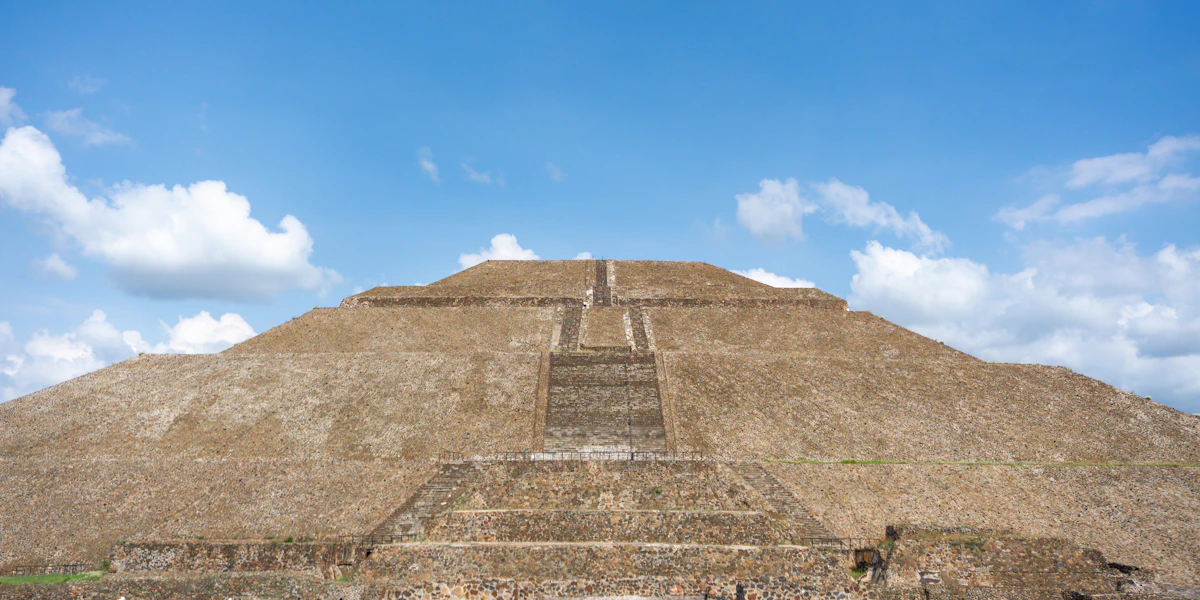
    Pyramid of the Sun at Teotihuacán — illustrative photo (Unsplash).

    Our trip started at 9 AM on a Sunday

    We left around 9 in the morning with a few other people and took an Uber from Parque México in Mexico City.

    We got lucky with the ride. It was a very comfortable Ford SUV, and the driver was incredibly kind. He even let us charge our phones on the way, which turned out to be very useful for a long day of photos and videos.

    The trip took about an hour and a half, and the fare was roughly 500 Mexican pesos. For a group trip, that felt completely worth it.

    The first surprise: it already felt busy

    Because it was Sunday, there was already traffic at the entrance by the time we arrived. Cars were lined up, and we had to walk around 200 meters to actually reach the entrance.

    My wife, who is Mexican, collected all of our IDs. I have permanent residency in Mexico, and she handled the tickets for us. To be honest, the whole entrance process felt surprisingly relaxed that day, almost as if things were moving more freely than expected.

    But what really hit us immediately was the weather.

    It was very sunny, and the heat was no joke.

    Right near the entrance, vendors were already selling water, and I would strongly recommend buying some. On a bright day like ours, the sun drains you fast, and this is definitely not the kind of place you want to explore dehydrated.

    A woman selling hats told me something I didn’t believe

    At one point near the entrance, a woman selling hats said something like:

    “You’ll spend three hours in there.”

    I remember thinking, No way. From here it looks small.

    That was my first mistake.

    Teotihuacán feels bigger with every step

    Once you enter the site, the layout is a little disorienting at first. It is not just one pyramid here and another one there. It is a massive open space, full of wide platforms, long paths, and geometric structures that keep stretching farther than you expect.

    You are also constantly moving up and down. You walk, climb a few steps, go down again, walk more, climb again. It is not difficult in a dramatic way, but it does make the site feel physical. You do not just look at Teotihuacán. You move through it.

    And slowly, the scale starts to sink in.

    My favorite pyramid was the first one

    The closest pyramid to the entrance was, for me, the most beautiful of them all: the Pyramid of the Feathered Serpent.

    This was the moment when Teotihuacán really grabbed me.

    What makes this structure so striking is the detail. You can still clearly see carvings of serpents and jaguar figures in the stone, and they are stunning. Even after all this time, the craftsmanship is still there in a way that feels almost unreal.

    The climb around this area is very short, less than a minute, because you are not really climbing the pyramid itself. You are stepping up onto a kind of raised platform that lets you face it properly.

    And that is exactly what makes it unforgettable.

    When you come down and the pyramid stands directly in front of you, it feels almost theatrical. It suddenly rises there with this elegant, powerful presence.

    For me, it was the most beautiful pyramid in the whole complex.

    Then the avenue opens up, and everything changes

    Avenue of the Dead and Pyramid of the Moon — illustrative aerial (Unsplash).

    After that first section, you return to the main central area and suddenly the full dimension of Teotihuacán begins to reveal itself.

    A huge open avenue stretches ahead of you, so long that it almost plays tricks on your sense of distance. At the far end stands the Pyramid of the Moon, and from that moment on, the whole site starts to feel monumental in a completely different way.

    I would estimate that central stretch to be around 1.2 kilometers long, and walking it under the sun is part of the experience. It is not just about seeing ruins. It is about feeling how deliberately this ancient city was designed to impress.

    The Pyramid of the Sun is enormous even from below

    Before reaching the Pyramid of the Moon, you come across the Pyramid of the Sun.

    It is massive.

    Even without climbing it, it dominates the landscape in a way that makes you stop and stare. We took a lot of photos there, partly because the weather was perfect and the light made everything look incredible.

    There are guards watching the restricted pyramids, and it is worth knowing that both the Pyramid of the Sun and the Pyramid of the Feathered Serpent are off limits for climbing now. They are being protected, and honestly, that makes sense. Preserving them matters more than forcing access.

    At the moment, the only major pyramid you can still climb partially is the Pyramid of the Moon.

    The climb to the Pyramid of the Moon is short, steep, and worth it

    From far away, it already looks impressive.

    As you get closer, it becomes even more striking. Before reaching it, there is also a small raised mound that gives you one of the best photo spots in the entire site, especially for capturing the central avenue.

    And then comes the climb.

    It is not extremely long, but the steps are steep and wide, which makes it more challenging than it first looks. There must be around 100 steps, more or less, and if you go at a decent pace, it takes about 4 to 5 minutes.

    Going up is manageable.

    Going down is harder.

    A lot of people need to use the handrail, and you quickly see why. The steps force you to pay attention. On the way down, people almost take turns because everyone wants to descend carefully.

    The best photo spot is at the top left corner

    Once you reach the top section, there are people everywhere trying to take pictures.

    But for me, the best position is clear: if you are facing the valley, the left corner gives you the strongest angle.

    That is where the whole place comes together.

    From there, you can see the central avenue stretching out in front of you, the Pyramid of the Sun off to the left, and the mountains in the background completing the scene. It is one of those views that does not just look beautiful. It makes the whole site make sense.

    You stop seeing isolated monuments.

    You start seeing the remains of a civilization.

    On both sides, there are stone mounds that I believe were once homes or residential structures, and the wider view gives you a much stronger sense of what this place must have been like when it was alive.

    If you want your most memorable photo of the day, this is the moment.

    One of the most surprising parts comes at the end

    After coming down from the Pyramid of the Moon, we headed to the right and found a series of rooms and excavated spaces that were among the most surprising parts of the entire visit.

    Inside, you can see restored murals and traces of original paintings, including reddish tones that remind you of something easy to forget: these pyramids were not always bare stone. They were once much more colorful.

    That detail stayed with me.

    It changes how you imagine the entire city. Suddenly, it feels less like a silent archaeological site and more like the remains of something that was once vivid, decorated, and alive.

    Ice cream, souvenirs, and a perfect ending

    As you come down near the excavated areas, there are small stands near one of the exits where you can buy ice cream and souvenirs.

    By that point, after all the walking and the heat, that part felt very welcome.

    We then walked toward Exit 3, where there is a traditional Mexican restaurant that I highly recommend. It was absolutely delicious, and it felt like the perfect way to end the visit.

    After hours in the sun, surrounded by ancient stone and wide open views, sitting down for a proper Mexican meal was exactly what we needed.

    The ride back was longer

    For the return trip, we ordered a normal Uber rather than Comfort, and because it was Sunday afternoon, there was noticeably more traffic.

    The ride back took us almost two hours.

    But even with the extra traffic and the tired legs, I left with the same thought repeating in my head.

    How is this place not considered one of the great wonders of the modern world?

    Another angle on Teotihuacán (on X)

    Same city, same kind of Sunday energy — worth a scroll:

    Final thoughts

    I strongly recommend this trip to anyone spending time in Mexico City.

    Teotihuacán is not just a famous archaeological site. It is one of those rare places that feels larger than the story you were told about it. It keeps revealing itself as you walk, climb, pause, and look again.

    For me, it is easily one of the great wonders of the modern world that never got officially chosen.

    I expected a nice day trip.

    What I got was one of the most unforgettable travel experiences I have had in Mexico.


    Staying in Mexico City before or after this trip? We host furnished apartments in Roma Norte and Narvarte — see StayWork CDMX.


    Written by Daniel & Analí — Rincones Mexicanos.

  • Uber vs Didi in Mexico City: Which App Should You Use? (A Local’s Honest Take)

    Uber vs Didi in Mexico City: Which App Should You Use? (A Local’s Honest Take)

    We've lived in Roma Norte for over four years. Between us and our 280+ Airbnb guests, we've taken hundreds of rides on Uber and Didi across Mexico City — at rush hour, at 2 AM, to the airport, from the airport (when that was still easy), and everything in between.

    Here's what we actually tell our guests when they ask: download both apps before you land. But open Didi first.

    The short answer

    Didi is usually 10–20% cheaper than Uber for the same route. Uber has more drivers and slightly faster pickup times. Both are safe. Both work with international credit cards. You want both on your phone.

    That said, there are real differences that matter depending on where you're going, what time it is, and whether you're paying cash or card. Let's break it down.

    Price comparison: real rides from Roma Norte

    These are actual fare ranges we see regularly in March 2026. Prices fluctuate with demand, but this gives you a realistic picture.

    Route Uber (MXN) Didi (MXN) Savings
    Roma Norte → Condesa $40–70 $35–55 Didi ~15% less
    Roma Norte → Polanco $60–100 $50–85 Didi ~15% less
    Roma Norte → Coyoacán $120–180 $100–150 Didi ~15% less
    Roma Norte → Centro Histórico $50–80 $40–65 Didi ~15% less
    Roma Norte → AICM Airport $120–200 $100–170 Didi ~15% less
    Roma Norte → Xochimilco $200–300 $170–250 Didi ~15% less
    Roma Norte → Teotihuacán $500–600 $450–550 Didi ~10% less

    Why is Didi cheaper? Two reasons. Didi takes a smaller cut from drivers (about 20%) compared to Uber (about 25%). And Didi uses dynamic pricing less aggressively — when Uber spikes to 1.8x on a rainy Friday evening, Didi is often still at 1.2x or lower.

    Pro tip: When Uber shows surge pricing, check Didi. The difference during peak hours can be 30–40%, not just 15%. We've saved $50+ MXN on single rides this way.

    Availability and wait times

    Uber has more drivers in Mexico City. Period. Mexico is Uber's third-largest market globally, with about 25 million users and 300,000+ registered drivers nationwide. You'll almost always get an Uber within 3–5 minutes in Roma Norte, Condesa, or Polanco.

    Didi has fewer drivers overall, but it's growing fast. In central neighborhoods, wait times are comparable — usually 4–7 minutes. Where you'll notice the difference is late at night (after midnight) or in less touristy areas. If Didi can't find a driver, Uber almost always can.

    Our approach: Open Didi first for every ride. If the wait time is under 7 minutes and the price looks good, book it. If Didi shows 10+ minutes or no drivers available, switch to Uber.

    Safety: both are solid

    Let's be direct — both Uber and Didi are significantly safer than street taxis in CDMX.

    Both apps give you:

    • Driver name, photo, license plate before pickup
    • Real-time GPS tracking of your route
    • Digital payment (no cash transaction needed)
    • Trip history and receipts
    • Rating system that holds drivers accountable
    • Option to share your trip with a contact in real time

    Didi also uses a 4-digit security PIN that you give to the driver before they start the ride. Uber has rolled out a similar verification feature. Both are good additions, especially for airport pickups where multiple drivers may approach you.

    One important difference: Uber lets you request "Uber Mujer" in some cities (female driver for female passengers). As of March 2026, this is not yet available in Mexico City, but it's been rumored for launch before the World Cup.

    Avoid InDrive. It's cheaper, but the driver vetting is minimal, vehicles can be sketchy, and the negotiation model means less accountability. We don't recommend it to our guests.

    Payment: cash vs card

    Uber: Works with international Visa, Mastercard, and Amex. You can also pay in cash. Most drivers prefer cash because Uber takes weeks to process card payments to them.

    Didi: Also accepts international cards and cash. Didi was actually built with cash-first markets in mind, so the cash experience is smoother.

    Our recommendation: Add your card to both apps, but carry small bills ($50 and $100 MXN notes). Some drivers may cancel if they see card payment, especially for short rides. Having cash avoids that friction entirely. Also, many drivers can't break a $500 MXN note — keep smaller bills on hand.

    The airport situation (March 2026 update)

    This is where things get complicated. As of March 12, 2026, the Mexican government deployed Guardia Nacional (National Guard) at AICM airport to prevent Uber and Didi drivers from picking up passengers inside the terminals. This happened after taxi union protests.

    What this means for you:

    • You can still REQUEST an Uber or Didi from the airport — but the pickup won't be at the terminal
    • For Terminal 1: you'll need to walk about 500–900 meters to a nearby street where drivers can safely stop
    • For Terminal 2: the walk is 500–1,200 meters
    • The apps still work; the drivers are just waiting outside the enforcement perimeter

    The alternative: Buy a pre-paid authorized airport taxi ticket at the "Sitio" booth inside arrivals. Fixed rate to Roma Norte is $700–1,000 MXN. Yes, it's 4–5x what Uber/Didi would cost, but you walk straight from the terminal to a licensed car with zero hassle.

    Our full airport guide: Read our AICM airport transportation guide for the complete breakdown →

    Uber has filed a legal injunction (amparo) arguing their drivers have the right to operate at federal airports, and a federal judge has issued a temporary suspension protecting Uber drivers from sanctions. But enforcement is ongoing. Check our airport guide for the latest.

    NEW: Uber Shuttle (launched January 2026)

    Uber has launched "Uber Shuttle" in Mexico City ahead of the World Cup — a shared van/bus service with fixed routes, fixed schedules, and no surge pricing. Think of it as a middle ground between Uber and the Metrobús.

    Currently it's running routes to and from Santa Fe, but Uber plans to expand routes as the World Cup approaches, especially to Estadio Azteca and fan zones. Look for "Uber Shuttle" as an option in the regular Uber app. It uses a security PIN like Didi, and it's significantly cheaper than a regular Uber ride.

    This could be a game-changer during the World Cup when regular Uber/Didi prices will spike hard.

    Other apps worth knowing about

    Cabify: Still exists in CDMX but smaller market share. Slightly more expensive, slightly nicer cars. Fine as a backup.

    Taxi CDMX: The city government is reportedly building its own ride-hailing app for the World Cup. Not yet launched as of March 2026.

    InDrive: Budget option where you negotiate fares with drivers. We don't recommend it — lower safety standards, unreliable vehicles, bidding model is stressful. Fine for locals who know what they're doing, not ideal for visitors.

    Tips we give every guest

    1. Always verify before getting in. Check the license plate, driver name, and car model match what the app shows. This takes 5 seconds and is the single most important safety habit.

    2. Sit in the back seat. Always. It's safer and it's the cultural norm in Mexico — sitting up front with the driver is unusual.

    3. Rush hour will wreck your plans. Weekdays 7–10 AM and 4–8 PM, Mexico City traffic is brutal. A 15-minute ride becomes 45 minutes. Either leave early, take the Metro, or wait it out at a café.

    4. Rain = price spike. The moment it starts raining (common in afternoon/evening during rainy season, May–October), both Uber and Didi prices jump 30–50%. The Metro doesn't care about rain.

    5. The Metro is often faster. For cross-town trips during rush hour, the Metro ($5 MXN per ride) beats any rideshare in both speed and cost. We use Uber for convenience, but the Metro is the real workhorse.

    6. Don't take street taxis at night. Period. Use Uber or Didi. The safety gap between app-based rideshare and random street taxis is real, especially after dark.

    7. Tip in cash. If the ride was good, hand the driver $10–20 MXN in cash. Both apps have tipping options, but cash tips go directly to the driver without platform cuts.

    Our verdict

    Uber Didi
    Price Higher, more surge pricing 10–20% cheaper, less surge
    Availability More drivers, faster pickups Growing, good in central areas
    Best for Late night, less touristy areas Daily rides, budget-conscious
    Payment Card + cash Card + cash
    Safety Excellent Excellent
    Airport Currently restricted at AICM Currently restricted at AICM
    App quality Slightly better UX Functional, getting better
    Driver earnings ~75% of fare ~80% of fare

    Bottom line: Download both. Open Didi first for everyday rides. Switch to Uber when Didi can't find a driver or you're in a hurry. Use the Metro when traffic is insane. Never take a random street taxi at night.


    Need a base in Roma Norte? Our loft is about a 10-minute walk to the Metro (Insurgentes / Chilpancingo area) — easy to combine with Uber and Didi when you do not want to sit in traffic. Fast Wi‑Fi, a dedicated desk, self check-in, and a welcome guide with the same ride tips we give guests.

    → See our Roma Norte loft on StayWork CDMX · → See Narvarte & other listings


    Last updated: March 22, 2026. Prices and availability change constantly — we update this post as things evolve. The airport situation is particularly fluid ahead of the World Cup.

    Written by Daniel & Analí — hosts of StayWork CDMX with 280+ guest reviews. We take rideshares in CDMX daily and have strong opinions about surge pricing.

  • Mexico City Right Now Is a Beautiful Mess. Here’s What to Expect Before the World Cup.

    Mexico City Right Now Is a Beautiful Mess. Here’s What to Expect Before the World Cup.

    We live in Roma Norte. We walk these streets every day. And right now, in March 2026, Mexico City is in the middle of tearing itself apart to look good for the World Cup.

    If you're planning to come to CDMX in the next few months — whether for the tournament, for remote work, or just to travel — here's what you'll actually find when you land. No sugarcoating.

    The streets are a construction zone

    Walk around Roma Norte right now and you'll see it immediately: sidewalks ripped open, exposed pipes, orange barriers, dust everywhere. The city is rebuilding streets, repaving roads, and upgrading infrastructure across the central neighborhoods ahead of the FIFA World Cup kicking off in June.

    It's not just Roma Norte. Condesa, Juárez, the Centro Histórico, and the roads leading to Estadio Azteca — they're all getting work done at the same time. The result is a city that feels like it's under renovation from every angle.

    The dust is real. If you have allergies or sensitive lungs, bring a mask for walking around during the day. Some blocks are worse than others — the construction moves section by section, so one week your street is fine and the next week it's a pit.

    Our honest recommendation: if you can, come AFTER the World Cup month (July onwards). By then, the construction should be mostly done, the streets will be freshly paved, and you'll get to enjoy the upgraded version of the city without the chaos of building it. The city is going to look incredible once it's finished — it's just not finished yet.

    If you're coming during the construction period (now through June), don't let it stop you. The city is still fully functional, restaurants and cafés are open, the Metro works, and the neighborhoods are alive. You'll just need to dodge some orange cones and deal with dustier-than-usual streets.

    Safety: better than you think

    Here's something that might surprise first-time visitors: Mexico City feels safe.

    We've lived here for over four years and hosted 280+ guests from all over the world. The most common thing our guests say after their first day is: "I expected it to feel more dangerous than this."

    The central neighborhoods — Roma Norte, Condesa, Narvarte, Juárez, Polanco — are walkable, well-lit, and full of people at all hours. There's police presence, there are security cameras, and the streets are active from morning until late at night. It feels more like Barcelona or Buenos Aires than what most people imagine when they think "Mexico City."

    Our strong recommendation: stay in Roma Norte, Condesa, or Narvarte. These neighborhoods are safe, walkable, and have everything a remote worker or traveler needs within a few blocks — cafés, restaurants, grocery stores, coworking spaces, parks, and excellent Metro access. You don't need a car. You don't need to take taxis everywhere. You walk.

    That said, common sense applies everywhere:

    • Don't flash expensive electronics on empty streets late at night
    • Use Uber or Didi instead of hailing random taxis (especially at night)
    • Keep your phone in your front pocket in crowded Metro cars
    • Stay in the neighborhoods you know, especially if you're new

    But honestly? Most of our guests feel safer here than they expected. The vibe is relaxed, people are friendly, and the neighborhoods where digital nomads and travelers stay are genuinely comfortable.

    Watch out for protests and street closures

    This is something no travel guide mentions but you'll experience it if you're here for more than a few days: teacher union demonstrations regularly block major streets in CDMX.

    Right now (March 2026), the CNTE (teachers' union from several states) has been holding protests near the city center. When they demonstrate, they block transit on major avenues — and the ripple effect is brutal.

    We've had several days recently where Paseo de la Reforma — one of the city's main arteries — was completely gridlocked because protesters were blocking intersections. If you have a meeting, a flight, or anywhere you need to be on time, check the news that morning.

    Practical tips for dealing with protests:

    • Follow @ABORDONMX or @LOSMOCHILEROS_ on X/Twitter — they post real-time traffic and protest alerts for CDMX
    • Google Maps usually updates traffic quickly when major roads are blocked
    • If Reforma is blocked, everything between Centro and Chapultepec will be slow — plan alternative routes or just wait it out at a café
    • The Metro is your best friend when streets are blocked — it runs underground and isn't affected by surface protests
    • These protests are peaceful. You're not in danger — you're just stuck in traffic

    This is part of daily life in Mexico City. Locals are used to it. Once you learn to check for it in the morning, you adjust quickly.

    Flying in or out? Traffic to the airport can be hit hardest on protest days — we cover X accounts, embeds, and day-of tips in our AICM airport transportation guide.

    What this means for digital nomads and remote workers

    If you're coming to CDMX to work remotely, here's the bottom line:

    The good:

    • The city is safe in the central neighborhoods. We walk home at midnight regularly.
    • Wi-Fi in apartments and cafés is fast and reliable — this hasn't changed.
    • The cost of living is still excellent for anyone earning in USD or EUR.
    • The food, culture, and social scene are as good as everyone says.
    • The city will look amazing once the World Cup renovations are done.

    The temporary inconveniences:

    • Street construction makes some sidewalks dusty and noisy during the day.
    • The airport (AICM) is also under major renovation — read our AICM guide.
    • Occasional protest-related traffic jams on Reforma and nearby avenues.
    • Some streets may have detours or temporary closures in your neighborhood.

    None of these are dealbreakers. They're inconveniences that last a few months. The city underneath is still one of the best places in the world for remote workers — affordable, walkable, culturally rich, and incredibly welcoming to foreigners.

    Best neighborhoods to stay (and why)

    Roma Norte

    The heart of the digital nomad scene. Art deco architecture, the best café density in the city, walkable to everything. Our Roma Norte loft is here — 5-minute walk to the best coffee shops. Construction is happening on some streets but the neighborhood is fully operational.

    Condesa

    Adjacent to Roma Norte, slightly calmer and greener. Parque México is beautiful for morning runs. More residential, slightly more expensive. Great for people who want a quieter base.

    Narvarte

    Our second neighborhood. Calmer, more local, less touristy. Near the hospital district and Parque Delta. Excellent Metro access. Significantly cheaper than Roma Norte or Condesa. Great for longer stays where you want to save money without sacrificing comfort.


    Booking a base for the World Cup or remote work? Our Roma Norte loft is set up for serious Wi‑Fi and a proper desk; we also list calmer Narvarte apartments with great Metro access — same hosts who wrote this guide.

    → See our Roma Norte loft on StayWork CDMX · → Browse all StayWork listings


    Where NOT to stay

    Tepito, Doctores (parts of it), La Merced late at night, and areas far from Metro lines if you don't have a car. Stick to the neighborhoods above and you'll have a great experience.

    The World Cup timeline

    Here's what to expect over the next few months:

    Now through May 2026: Peak construction. Streets being rebuilt, airport under renovation, dust and noise. The city is hustling to get everything ready.

    June 2026: World Cup begins (June 11). Construction pauses. The city will be packed with fans, prices will spike, and the energy will be electric. Amazing to experience but not ideal for quiet remote work.

    July 2026 onwards: The sweet spot. Construction mostly done, World Cup crowds gone, freshly renovated streets and infrastructure. This is when the city will shine. If you can time your visit, this is it.


    Planning your CDMX stay? Our apartments in Roma Norte and Narvarte are set up for remote workers — fast Wi-Fi, dedicated workspace, self check-in, and monthly discounts. We'll help you navigate the construction, the airport, and everything else.

    → See all listings on StayWork CDMX


    Last updated: March 22, 2026. We update this post as the situation evolves. The World Cup starts June 11.

    Written by Daniel & Analí — hosts of StayWork CDMX with 280+ guest reviews. We live in Roma Norte and deal with the construction dust every day.

  • I Landed in Mexico City and Couldn’t Get an Uber. Here’s What Nobody Tells You About AICM in 2026.

    I Landed in Mexico City and Couldn’t Get an Uber. Here’s What Nobody Tells You About AICM in 2026.

    Last updated: March 23, 2026

    If you're flying into Mexico City right now, you need to be prepared. The AICM (Aeropuerto Internacional de la Ciudad de México) is simultaneously undergoing its biggest renovation in decades AND dealing with a fresh ban on Uber and Didi inside the terminals. The combination means longer waits, confusing detours, and significantly more walking than you'd expect.

    We've hosted over 280 guests in Roma Norte and Narvarte. Airport arrival is the #1 thing people message us about before their trip. Here's the honest, up-to-date guide.

    The current situation (March 2026)

    Two things happened at the same time:

    1. Massive World Cup construction

    Mexico is co-hosting the 2026 FIFA World Cup this summer. The AICM is racing to finish a $9.2 billion MXN renovation before the tournament starts in June — and they're nowhere near done.

    As of March 2026, the renovation is roughly 40% complete. The airport director has publicly admitted that not all work will be finished before the World Cup. Over 2,000 workers are operating 24 hours a day across both terminals.

    What this means for you as a passenger:

    • Blocked walkways and rerouted corridors in both Terminal 1 and Terminal 2
    • Construction barriers, dust, and noise in several areas
    • Some boarding gates relocated or temporarily closed
    • Baggage claim carousels being replaced (28 of them)
    • Elevators and escalators out of service in several sections
    • Façade work on Terminal 1 has eliminated the sidewalk between doors 2–6 — you may have to walk on the road with your luggage
    • Signage is unreliable because things change week to week

    Our advice: arrive at the airport at least 3 hours before your flight. The construction makes everything take longer — security checkpoints, walking to gates, and finding your way through detoured corridors. Don't cut it close.

    2. Uber and Didi banned from picking up inside

    On March 11, 2026, licensed taxi drivers blocked both terminals in a protest against ride-hailing apps. The government sided with the taxi drivers. Since March 12, the Guardia Nacional (National Guard) is permanently stationed at the AICM to prevent Uber and Didi from operating inside the airport's federal zone.

    What national TV reported (Azteca Noticias, Hechos Meridiano, via this post on X): authorities are carrying out a strict enforcement push at the airport against app-based taxis, with fines of up to about MXN $80,000 in some cases — even as legal challenges (a judicial suspension has been in the news) continue in parallel. Reporter Jessie Mozar (@jessiemozar) noted that the policy in force since March 12 is already hitting drivers’ income and how many rides you actually see available near the terminals.

    This means for you as a traveler:

    • Uber and Didi drivers cannot pick you up inside the terminal or the airport’s federal zone — you still have to walk out to request a ride (see below)
    • Drivers who break the rules risk heavy fines and enforcement, not just a slap on the wrist — which is part of why fewer drivers may accept airport pickups than before
    • The official airport taxis now have a near-monopoly on curbside arrivals
    • Prices for official taxis have surged to $700–1,000 MXN ($35–50 USD) for a ride to Roma Norte — a trip that costs $80–150 MXN on Uber once you are outside the zone

    The ban is not temporary. It was negotiated as a condition to prevent permanent taxi blockades during the World Cup. The legal story can change — watch trusted Spanish-language outlets (@AICM_mx, @aztecanoticias) if you want the latest before you fly.

    How to get from AICM to Roma Norte (or Condesa / Narvarte)

    Here are your four realistic options, ranked from cheapest to easiest:

    Option 1: Uber or Didi — still works, but you have to walk out

    This is what most of our guests do. Uber and Didi are NOT gone — you just can't get picked up inside the terminal anymore. You need to walk outside the airport's federal zone to a designated pickup area.

    From Terminal 1:

    1. Exit the terminal through any door
    2. Walk toward Circuito Interior (Boulevard Puerto Aéreo)
    3. Head toward Metro Terminal Aérea station (Línea 5)
    4. The pickup zone is approximately 800–900 meters from the nearest terminal door
    5. Open Uber or Didi and request your ride from there
    6. Enter your terminal number and door in the app notes

    From Terminal 2:

    1. Exit through Puerta 1 (Door 1)
    2. Walk to Eje 1 Norte / Avenida Fuerza Aérea Mexicana
    3. The pickup bay is approximately 500 meters from the door — though some sources say up to 1,200 meters depending on which door you exit
    4. Request your ride from there

    Cost to Roma Norte: $80–150 MXN ($4–8 USD)
    Total time: 25–40 minutes (including the walk)

    The reality check: You'll be walking 500–900 meters with your luggage, potentially at night, past construction zones. The walk is on public roads and generally safe, but it's not the smooth arrival experience you might expect. If you're arriving at 2 AM with heavy bags after a 10-hour flight, think about whether the $600+ savings is worth it.

    Pro tips:

    • Install Uber AND Didi before you fly — have both as backup
    • Download CDMX offline maps in Google Maps (airport Wi-Fi is unreliable)
    • Get a Mexican eSIM before you land (Airalo or Holafly) so you have data immediately
    • Request UberX or Didi Express for the best price
    • Surge pricing hits hard between 6–9 PM and Sunday evenings

    The morning of your flight: check traffic into AICM

    Protests or major road closures in the city can add 30–60+ minutes to the drive between Roma, Condesa, Narvarte, and the airport — the same arteries ride-hailing uses get gridlocked when Reforma or nearby corridors are blocked.

    Below is an embedded post from Azteca Noticias. If it does not load (ad blockers, X outages), open it on X.

    For city-wide construction and protests (not only the airport), see our guide to CDMX before the 2026 World Cup.

    Option 2: Official airport taxi — expensive but zero hassle

    Licensed taxi booths are inside both terminals. You buy a ticket at the counter, tell them your destination, and walk to the taxi stand.

    Cost to Roma Norte: $700–1,000 MXN ($35–50 USD)
    Total time: 15–25 minutes

    Yes, you're paying 5–10x more than Uber for the exact same 10 km trip. That price difference is exactly why the taxi drivers fought so hard to ban apps from the terminals — and why the government backed them.

    When this makes sense: Late-night arrivals, heavy luggage, first-time visitors who don't want to navigate construction zones in the dark, or anyone who values a stress-free arrival over saving money. No judgment — after a long flight, sometimes you just want to be in bed as fast as possible.

    Option 3: Pre-arranged private transfer

    Several companies offer meet-and-greet service inside the terminal with a name sign. You book in advance, they handle everything.

    Cost: $400–600 MXN ($20–30 USD)
    Total time: 15–25 minutes, zero walking

    This is the sweet spot between Uber prices and official taxi convenience. We can arrange this for our StayWork CDMX guests — just send us your flight number when you book.

    Option 4: Metro — cheapest, with caveats

    Metro Terminal Aérea (Línea 5) connects to the airport. From there you can reach Roma Norte via transfers.

    Cost: $5 MXN ($0.25 USD)
    Total time: 40–60 minutes with transfers

    Honest take: We don't recommend this if you're arriving with luggage larger than a backpack, at night, or on your first visit. The Metro is safe during daytime rush hours but the transfers with suitcases through crowded stations are not fun. It's a great system once you're settled — just not ideal for airport arrival.


    Figured out how you'll leave the airport? Our Roma Norte loft is about 20 minutes from AICM by Uber or taxi once you're outside the terminal zone. Fast Wi‑Fi, a dedicated desk with a 27" QHD monitor, rooftop pool, and self check-in — handy when you land at 2 AM after the construction walk.

    → See our Roma Norte loft on StayWork CDMX


    Quick comparison

    Option Cost (to Roma Norte) Time Walk with luggage?
    Uber / Didi $80–150 MXN 25–40 min 500–900m walk to pickup
    Private transfer $400–600 MXN 15–25 min None — they meet you inside
    Official taxi $700–1,000 MXN 15–25 min None
    Metro $5 MXN 40–60 min Stairs and transfers

    What to expect inside the airport right now

    Based on current reports (March 2026) and feedback from our recent guests:

    Terminal 1:

    • Façade work between doors 2–6 has eliminated the sidewalk — you walk on the road
    • Boarding gates in module 5 (gates 24–28) under renovation
    • Baggage claim belts 1–3 being replaced
    • New security screening equipment being installed (should be faster once done)
    • Construction dust and noise in several corridors
    • The Aerotrén (inter-terminal train) station is under renovation

    Terminal 2:

    • Boarding lounges in the north and south wings under renovation
    • Parking structure being upgraded (new signage, colored floors by level)
    • New digital signage screens installed in some areas
    • International baggage claim area under construction
    • Bathroom renovations across multiple levels

    Both terminals:

    • Rerouted walking paths with temporary barriers
    • Some commercial areas closed or relocated
    • Floors, ceilings, walls being replaced in phases
    • Electrical, plumbing, and drainage systems being overhauled
    • 2,000+ workers active 24/7

    The construction is scheduled to pause between late May and July 2026 during the World Cup, then resume until the end of the year. If you're visiting during the tournament, the airport should be calmer but still not fully finished.

    Before you fly: preparation checklist

    • Download Uber AND Didi apps, add payment method
    • Download Google Maps offline map for Mexico City
    • Get an eSIM (Airalo, Holafly) or plan to buy a Telcel SIM at the airport ($150–200 MXN)
    • Have $1,000 MXN cash as backup (some taxis and shuttles are cash-only)
    • Know your terminal number (check your airline)
    • Tell your host your flight number and arrival time
    • Leave extra time — arrive 3 hours before departure flights
    • Pack light or use a backpack if you plan to walk to the Uber pickup
    • Morning of your flight: glance at traffic on X (see section above) so you are not surprised by closures on the way to AICM

    Once you're in Roma Norte, you won't need taxis again

    This is the silver lining. The airport transfer is the one painful moment of arriving in Mexico City. Once you're in Roma Norte, everything is walkable — cafés, coworking spaces, restaurants, groceries, Metro stations. Our guests rarely take a taxi or Uber during their stay because the neighborhood is that well-connected on foot.

    The airport chaos is temporary. Your stay in Roma Norte won't be.


    Last updated: March 23, 2026. The airport situation is evolving rapidly. We update this post as new information becomes available. The World Cup starts June 11 — expect further changes.

    Written by Daniel & Analí — hosts of StayWork CDMX with 280+ guest reviews. We've navigated AICM arrivals more times than we can count.